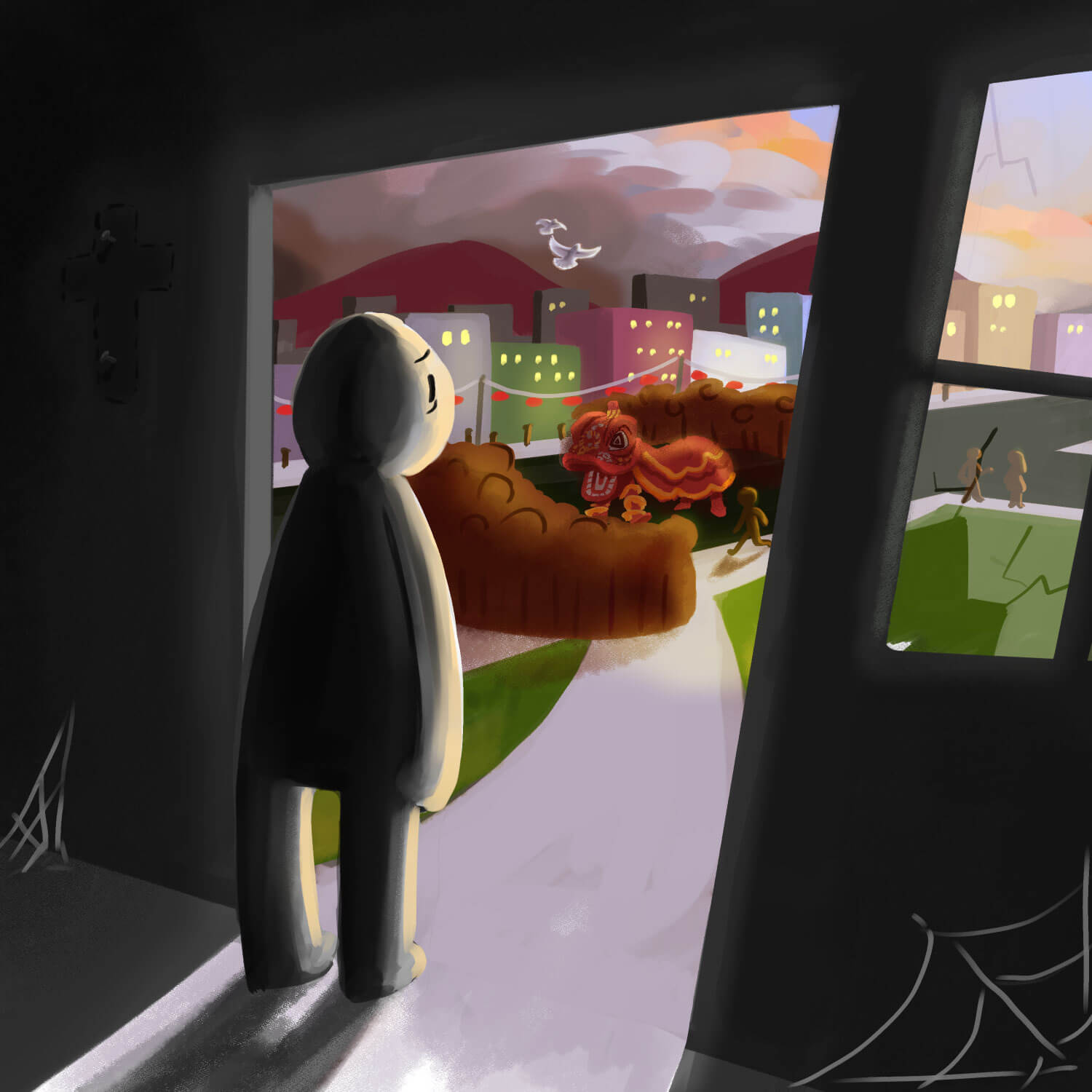
I say this not as a lament or warning, but merely an observation. The chaos of the past eight years has in many ways been clarifying. Many churches have made concrete what had previously been left to conjecture, whether a political stance, an exclusion of a group, or a disregard for the sick and vulnerable.
Many of my friends, caught in the crossfire of culture wars, sat through sermons that oversimplified and spiritualized real issues, antagonized the world, and scolded those who dared imagine something different. Other friends became all too familiar with the silence of the Sunday after: the Sunday after the election, after the shooting, after the court ruling, after tears and rage and grief. This isn't just about liberals in conservative churches. It's about folks longing for something real: an acknowledgement, a space to grieve, an honest "I don't know" in the face of such profound tragedy. Instead, they were met with oblivion and apathy, pushed away by hands that did not know how to hold the complexities of real pain, grief, and hope. Those searching for that kind of community did not find it in their churches, so they left.
And I would too, if I wasn't a pastor.
The reality is that as my calling into pastoral ministry has become clearer and clearer, I have also become more deeply acquainted with the tragic holiness of my own doubts and questions. I am a pastor who has pulled on the thread and watched it all unravel, from scripture to prayer to church to belief itself. Even as I am more sensitive to the mystery and beauty of it all, I am also more aware than ever of the contradictions, the institutional messes, the injustice, trauma, violence, and pain. And even with all of this, I must still show up every Sunday and proclaim the Word of the Lord, somehow. There are some weeks this feels like the greatest honor. There are other weeks it feels like complete shit.
Part of the reason I became a pastor is because I still believe that there can be something better for us, that there is such a thing as a community of people who are rooted to a neighborhood and committed to one another in real, messy ways, who have offered themselves to be shaped by the way of Jesus, the carpenter from Nazareth. Many years ago, my parents fled their immigrant church in San Francisco Chinatown because they were handed a fearful faith that was more of a weapon than a way forward. This faith did nothing to help them navigate the world as the children of immigrants in a city carved up by developers and segregationists. I became a pastor because I still believe that it's possible to cultivate a community that would have been kinder to my parents and people like them.
Many of our churches, however — even our immigrant churches — were not designed to be hospitable to us and the things we carry. A 2008 study done by Ohio State University showed that, unlike their Black and white counterparts, Asian American youth who regularly attended church were more likely to be depressed than their non-churchgoing peers. Young Asian American Christians were the only group in their study for whom increased church participation led to increased symptoms of depression. If this is the case, I certainly can't blame anyone for wanting to leave when the communities that were meant for our liberation and healing are instead actively contributing to our harm and bondage. But I believe we can do better.
• • •
In 1851, a physician named Samuel Cartwright described a form of insanity that he called "drapetomania". Stemming from the Greek word, drapéti, meaning "runaway" or "fugitive", drapetomania described the condition of a slave so possessed with the longing for freedom that they would attempt to escape their captivity.
About 15 years after Cartwright's invention, a Methodist missionary named Otis Gibson arrived in San Francisco, quickly becoming one of the Chinese community's most vociferous advocates during a time of violent anti-Chinese sentiment. Gibson believed, as many missionaries did, that the Chinese had been sent by God to America to "add to our national prosperity" if only they were "introduce[d]... to our higher civilization and to our holier faith." Towards that end, Gibson established Methodist mission houses around the Bay Area and central California.
Gibson's support of the Chinese was also attached to a fear that Irish immigrant labor unions and the Catholic Church were conspiring to destroy free market capitalism, which had Protestant liberty at its core. If they were drawn into the Protestant embrace, then, the Chinese were perfectly situated to stave off Irish labor and protect the soul of America. However, as labor unions grew, Protestant ministers began to worry that support of the Chinese would alienate working class whites. As a result, many once-outspoken advocates of the Chinese, including Gibson, began to retreat. In fact, the pendulum of Gibson's support swung so far in the opposite direction that in 1881, he defended legislation that required all Chinese men to cut off their long hair and wear American clothing, a policy he said would cut Chinese immigration in half. A year later, the Chinese Exclusion Act was passed, in large part because Gibson and other ministers had abandoned the Chinese when they no longer fit their agenda.
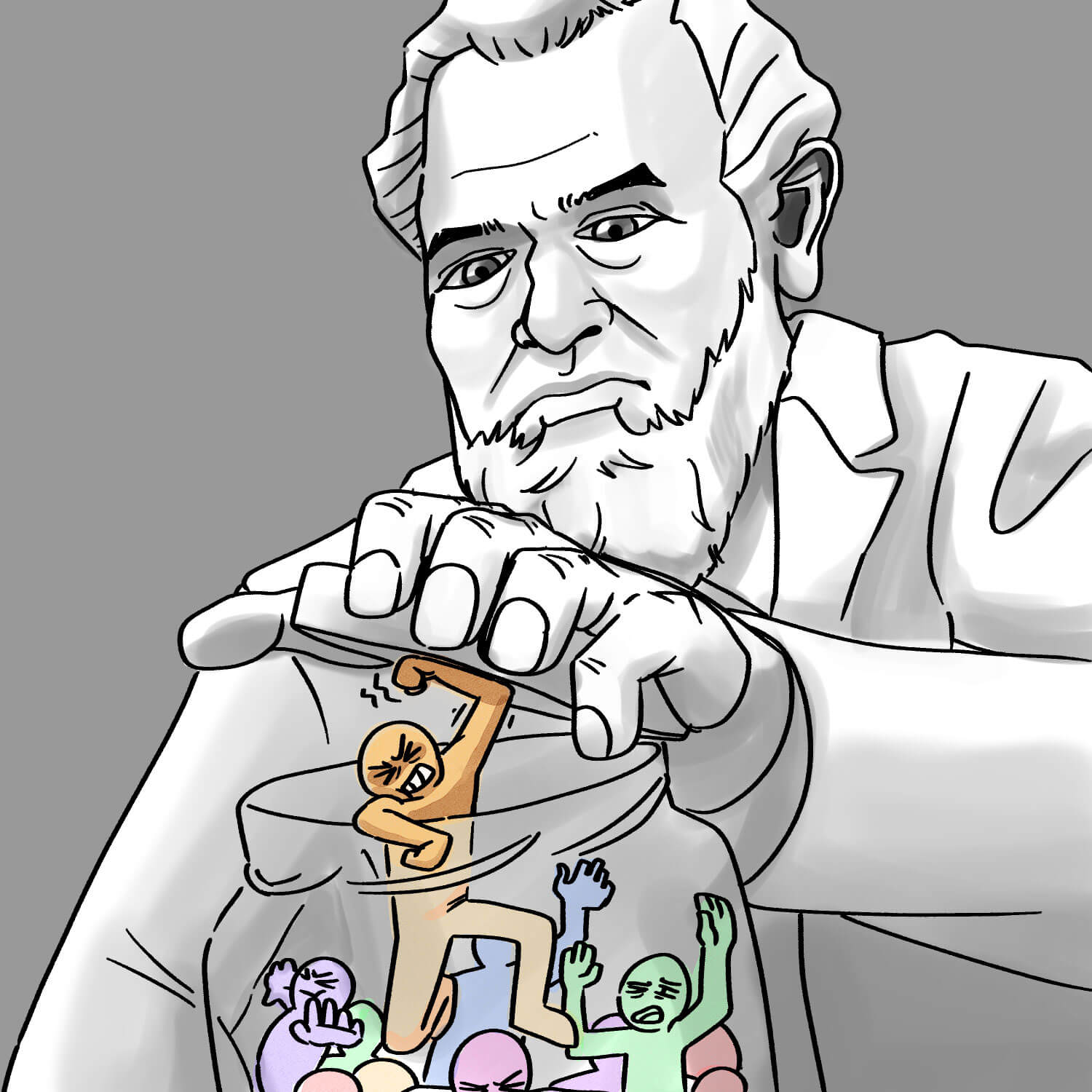
Towards the end of his life, with the Methodist mission dwindling, Gibson noted the presence of a Chinese man in his congregation who desired to leave the community. He "seemed possessed," Gibson reported, "with an ambition to set up an independent Chinese church, with himself as the head."
Possessed. A word used throughout history to describe someone who has been given over to the demonic. Possessed. Used by those in power to identify that which threatens them, those over whom they have lost control. One of the greatest ironies that runs throughout Scripture and human history is that those who wield religious power consistently call "demonic" what are actually works of God.
Eventually this unnamed Chinese man was "excluded from the Church, and four or five of his adherents [were] cut off from membership." Sadly, there isn't much other information about him, but he and I have had the same rumblings in our spirit. Perhaps, like many of us, he felt the frustration, the loneliness, the fatigue, the small premonitions that the mission house was not made for his flourishing. Perhaps he knew that his longing for freedom, despite Gibson's insistence otherwise, was not indicative of possession or insanity, but faithfulness. That the most honest, loving, and courageous thing he could do was to step out of the counterfeit safety of a place that his faith had outgrown.
Many of us too, holding the fragments of a once-coherent faith, have learned to call ourselves unfaithful when it was actually God's own spirit leading us the whole time. I confess, it is profoundly frightening and disorienting to reject the only picture of faithfulness we've ever been given, to run towards something that exists beyond the horizon of our imaginations. But perhaps there is indeed a God on the other side of our so-called insanity, a God who waits for us to finally cross the threshold of our fear of unfaithfulness, even if this God looks nothing like the one we thought we knew. My hope is that we too would become possessed by the desire for liberation, that we would begin to trust the voice that has been whispering this whole time, inviting us to become runaways and fugitives longing for something more capacious and free.
Through men like Gibson, faith became entangled with the American dream. The church became a place of contortion, a place where we were squeezed into the narrow goals of an American project, and then rejected when we did not serve it. The hope, then, is not to gain belonging in a place that was designed for our exclusion, but to imagine and embody completely new forms of belonging, care, and life together that help us escape the violence of a place that has always wanted to use us. Ultimately, faithful fugitivity is not a question about whether or not we will stay in the church; it's about how we will free ourselves from the shackles of the American dream.
When my parents left their Chinatown church, they had no idea that decades later I would find my way back. When they found out I had started going to church, my parents were concerned that their son was walking back into a prison they had managed to escape. But from the dust of their departure was breathed into me the ability to imagine and choose something better. I am a pastor today because of their faithful escape. The decisions we make now are not just for us. They are also for the generations after us who will, God willing, embody a faith we cannot yet picture and call God a name we cannot yet pronounce.
The longing for freedom is always an act of the Spirit. While men like Cartwright and Gibson feared it, the unnamed Chinese man opened his palms, welcomed the whispers, and pressed his imagination as far as it could go. We live in the wake of his decision and step forward into the space he tore open. The future depends on how we will channel his courage and welcome his insanity, how we will become faithful fugitives convinced of an impossible dream, possessed with visions of a life we cannot yet imagine.

Matthew Ng is a Chinese-American digital illustrator born and raised in the Bay Area. In 2022, he graduated from UC Davis with a BA in Cinema and Digital Media. Matthew currently resides in San Francisco where he continues to make art.