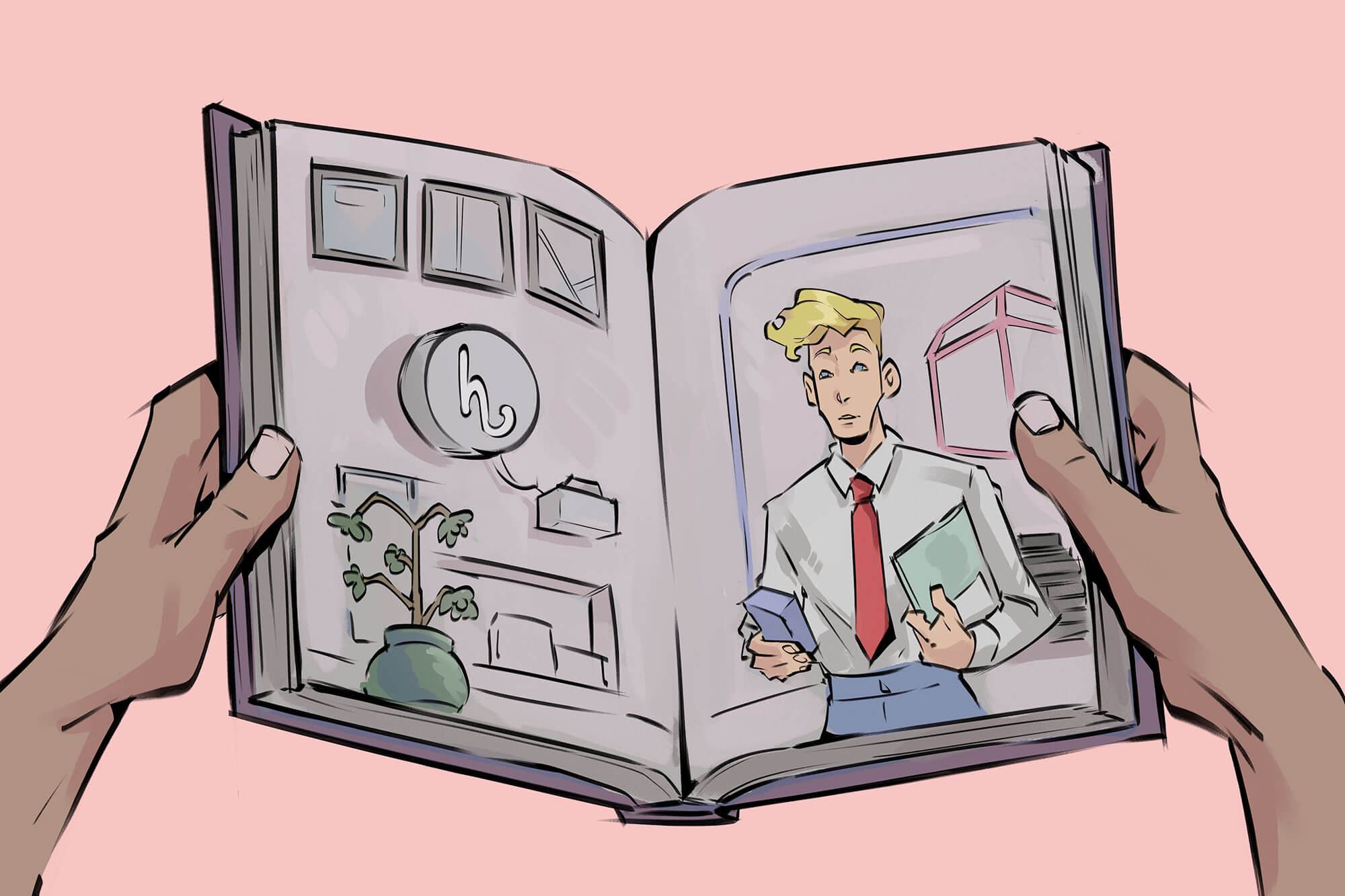
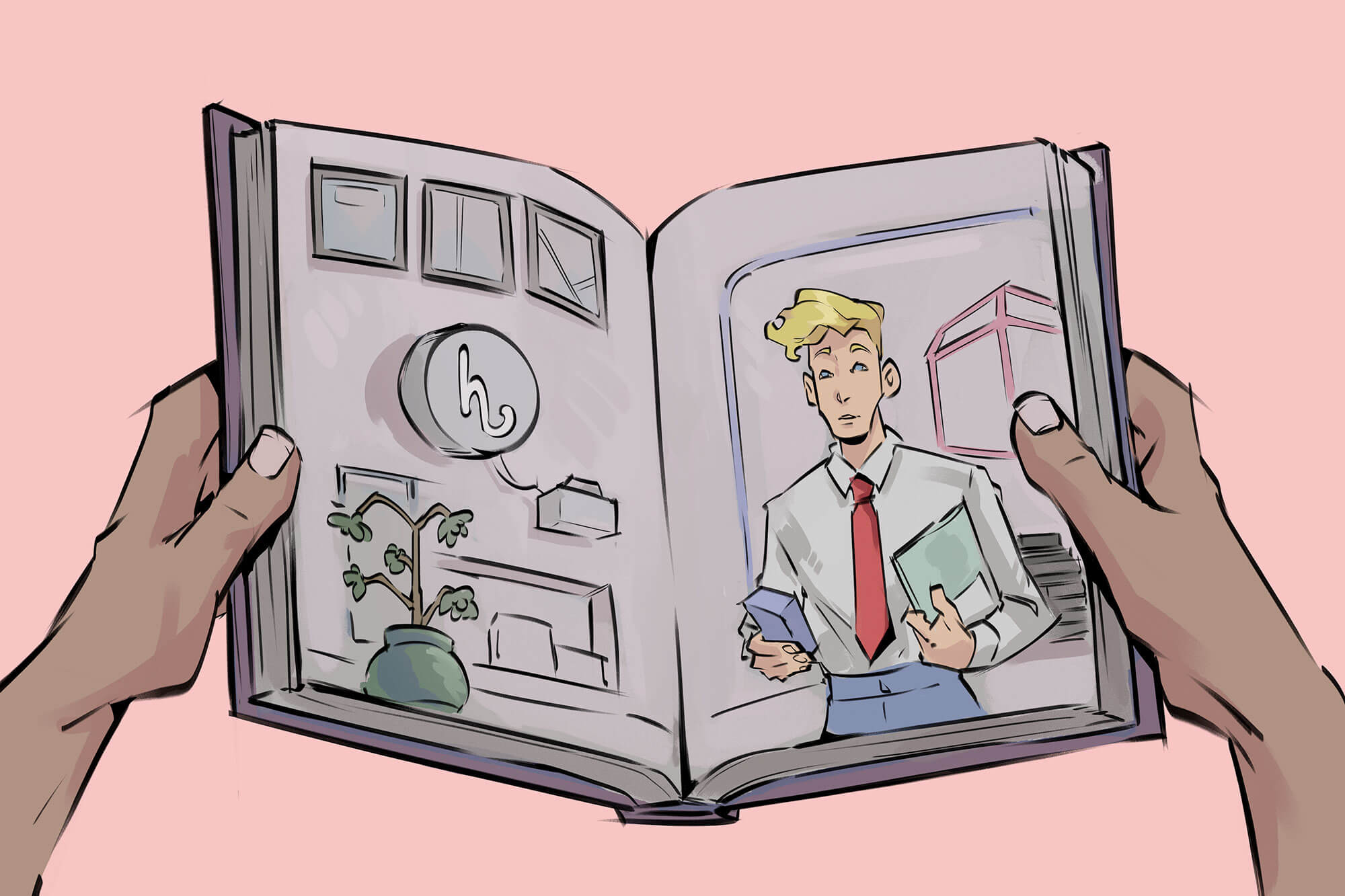
May was Asian American Pacific Islander Heritage Month. Wasian representation is at an all-time high (hasn’t it always been?) and one of the most visible Wasians, Darren Criss, just wrapped up his second run in the Broadway musical “Maybe Happy Ending (MHE)”.
Last summer, MHE (which by then had become my most favorite musical) got embroiled in a casting kerfuffle. This show about two retired Helperbots in Seoul, Korea, falling in love on an adventure to Jeju Island had just won the Tony for Best Musical. Darren Criss, a Filipino American actor, had just won the Best Actor in a Musical award, while its female lead, Chinese American actor Helen J. Shen, captured audiences in her first ever leading role on Broadway. Earlier this month, she made her debut on the silver screen in the “Devil Wears Prada 2”.
The trouble started when Criss’s first departure from the show was announced, along with news of his replacement: Andrew Barth Feldman, a white actor, and Shen’s real-life partner. The negative response was swift, as Asian American fans felt disappointed that a show that finally forefronted actors of Asian descent and was getting the critical and commercial attention it deserved on the Great White Way was replacing its lead with a white guy. In what felt like slow motion, I saw the discourse on the politics of representation begin to take shape.
While I love the show, I am much more skeptical about the possibilities that the politics of representation can provide, especially among Asian Americans. From what I’ve seen, an uncritical lens toward representation for Asian Americans leads to one of two places: (1) It unwittingly replicates desires to occupy the space or subjectivity of white folks — Asian Americans wanting a “place at the table”, basking in the spoils of whiteness and all it offers despite any injustice it might perpetuate. The character Yasuhiko Oyama bidding at the auction in Jordan Peele’s film “Get Out” symbolizes this tantalizing, but ultimately death-dealing possibility. Alternatively, (2) representation looks like tokenization: a person from an underrepresented background gets put into a job or position for the purpose of checking a diversity box or is expected to fix the situation with little to no resources or support in the endeavor.
I remember being very moved when Kamala Harris became Vice President (yes, even despite the “Kamala’s a Cop” discourse) simply because she was a mixed Blasian from the flatlands of Oakland, CA. Perhaps we need no further examples of representation-gone-wrong than Harris’ vice presidency and subsequent surprise presidential candidacy to see that people who operate within systems that remain broken, regardless of their competence, and regardless of the diversity embodied in their experience, are unable to singularly make meaningful change. As I said when she was first brought into office from the standpoint of representation — it’s not nothing that she was vice president; but it certainly wasn’t everything.
Asian Americans by now are quite familiar with the historical forces that hold our diverse communities back in the racialized landscape of the United States: the model minority myth, the perpetual foreigner syndrome, the complexity of racial triangulation, and all of the post-colonial shades of hybridity and in-betweenness. So as this conversation about a show that I had come to adore began to pop off, I buckled right in, and asked myself: “What does this cultural moment with MHE tell us about how Asian Americans are currently engaging with the politics of representation?” If I took this instance of fighting for representation more seriously, might I see something beyond my skepticism? What is actually at stake here?
• • •
Though my mind says no to the possibilities of the politics of popular representation, if I am honest, my heart screams “Yes!”
I’d like to think that I can spot a Filipino from a mile away. We’ve only lived in our neighborhood here in upper Manhattan for five years, but I have a mental rolodex of people I’ve bumped into on the street who I’ve suspected of being Filipino, or have indeed confirmed being Filipino. Recently, while out on a run, I passed by a woman who I’ve heard speak Tagalog when dropping her kid off at school. When I passed by her, we made eye contact, and I hit her with a “Kamusta po?” — she chuckled, and I took off. Maybe it’s being displaced from the ethnic enclave of my youth that has made me all the more eager to spot the Filipino, give the knowing nod, and move on. I do this with celebrities too — quickly declaring, “I’m pretty sure this actor is Filipino…” before running a quick IMDB search. (My wife says that I think everyone is Filipino). All this is to say, I get very excited when I meet or see Filipinos. Especially when they’re doing big things on big stages.
I don’t care if it’s Melissa Howard slamming a chair on “The Real World”, Pia Manalo singing happy birthday on Barney, or the exploits of any Manny for that matter — Pacquiao’s lethal left fist or Jacinto’s lethal face card — I am going to cheer for them. Since last summer, I have beamed with pride as I watched Alex Eala become the first Filipina tennis player to win a Grand Slam match at the US Open, all while Fil-Ecuadorian-Canadian Leylah Fernandez made it to round three. And how could I forget getting to watch and listen with joy as the Bakunawa herself, Waray/Filipinx rapper Ruby Ibarra rocked the mic on NPR’s Tiny Desk? Representation does something visceral in me.
On one hand, one may read this as mere vanity: someone who looks like me is doing cool things. But on the other hand — and perhaps deeper than that — it’s affirmation that someone who looks like me, grew up eating the same foods, spoke a mother tongue similar to that of my family’s, and was shaped by similar historical forces is succeeding in some discernible way in a world obsessed with and anchored around whiteness and all of its tentacles. Representation can feel like both vanity and affirmation. I wonder if that’s often what makes me feel uneasy about these conversations: it’s hard to separate the vanity from the survival; the success from the succumbing and surrendering to whiteness.
Filipinx American writer Elaine Castillo, in her book, “How to Read Now”, has this to say about the challenge that faces writers of color:
“White supremacy is a comprehensive cultural education whose primary function is to prevent people from reading — engaging with, understanding — the lives of people outside its scope. This is even more apparent in the kind of reading most enthusiastically trafficked by the white liberal literary community that has such an outsized influence, intellectually and economically, on the publishing industry today. The unfortunate influence of this style of reading has dictated that we go to writers of color for the gooey heart-porn of the ethnographic: to learn about forgotten history, harrowing tragedy, community-destroying political upheaval, genocide, trauma; that we expect those writers to provide those intellectual commodities the way their ancestors once provided spices, minerals, precious stones, and unprecious bodies.”
Castillo points to the very challenge that I feel for myself in my work as a theologian of color: writing about the mystery of the Divine with what I know from the depths and wisdom of my experience, all while refusing to do so with the aims of legibility or worse, acceptability. She leads me to ask, how do I not tell my story for the sake of providing ethnographic data for the white gaze?
I suppose this is what concerns me most with uncritical appeals to representation, especially with regard to Asian Americans. Rather than telling our own stories on our own terms, we continue to tell stories within the frames and expectations of whiteness. And even when we don’t, the creeping suspicion that we might be doing so disciplines our very creative endeavors of self-expression.
Castillo offers up helpful categories that stretch my thinking with regard to representation: the Expected and Unexpected Reader. She explains that being an Unexpected Reader — someone for whom a book was never intended, someone the author never imagined would pick up the book — has been a gift, as she has always been challenged to enter a world that was new and unfamiliar to her. Being an Unexpected Reader is a naturally curious posture. Very rarely has she, as a Filipinx woman from the Bay Area, ever felt like an Expected Reader. As you might guess, the experience of whiteness is the experience of always assuming the posture of an Expected Reader — the one whom the author had in mind when writing. (Personal note: I’ll never forget how it felt to read Castillo’s first novel, “America is Not the Heart” — and the scene where Roni chooses frozen pizza over leftover chicken adobo… I have been Roni! One of the few times in my life I did not feel like an Unexpected Reader). As such, Castillo explains, people who are used to being an Expected Reader often demand that any foray into the different or foreign leave enough traces of familiarity to comfort the reader or to at least reward them for their effort of “enduring” their temporarily marginalized experience. This is what she means when she critiques representation in books or art that is aimed at the building of empathy; more often than not, it centers the Expected Reader — that is to say, in our society, the white person.
Perhaps the success of Maybe Happy Ending is due to the fact that theatergoers of all types were pressed to become Unexpected Readers of some sort. Being brought into the future, to Seoul and Jeju Island in a time of humanoid robots is perhaps enough displacement for us all. A few years ago, when walking out of the previews of “Here Lies Love”, a musical developed by Fatboy Slim and David Byrne about Imelda Marcos, I remember observing white audience members storming out of the theater, refusing to even fill out any surveys to provide feedback for the show. Their body posture and remarks communicated it all: “This musical was not for me” (and is therefore bad). To be sure, “Here Lies Love” is not without its problems (with many Filipino Americans remarking that “this musical too, was not for me”), but perhaps the concreteness of historical figures and a knowledge of the Marcos dictatorship and People Power Revolution in the Philippines was too much prolegomenon to simply enjoy a night at the theater. To enter an unfamiliar history that has already happened is undoubtedly a higher bar than entering a whimsical future.
“When you’re in love, you are the loneliest. You’re only half, when one is what you were; you’re part, instead of whole. When you’re in love, you are the loneliest.”
(When You’re in Love)
What a show about robots does is it renders the familiar as unfamiliar. While we think we understand love and loneliness as truly human things, to see a robot try to make sense of human relationships helps us to account for the contradictions and quirks we’ve taken for granted in the fragility of our existence. The collective strangeness of reading our own humanity from the outside places us all in the role of an Unexpected Reader.
• • •
There is something undoubtedly unique about representation when it comes to acting. The very vocation of an actor is to inhabit a character, to transform one’s own body and presence to represent an entirely different person, reality, or experience. According to theater and performance scholar Angela Pao, up until the 1960s, the expected realism of casting and acting within the tradition of white American theater expected that the voice of an actor “be submerged beneath the voice of the [character]” (No Safe Spaces, Pao, 25). In other words, nothing but the intentional performance choices made by the actor were intended to communicate or signal. Up until this point, white invisibility in American theater — the seeing of whiteness as the norm, and therefore, unremarkable, signifying nothing at all — was the assumption for casting. With the upheavals of the 1960s, the rise of the Black Power movement, the Civil Rights movement, and the growth of Third World consciousness, overall awareness about the realities of race eventually made this fiction untenable.
Thus, the unspoken practice of what might be understood as “traditional casting” — unconscious white normative casting — was exposed, as a story told onstage could no longer be told without the race of the actor signifying something. As “nontraditional casting” — casting decisions made beyond white normative conventions — gained influence, it was no longer simply the actor speaking with their words, submerging themselves beneath the presentation of a character; now the actor’s body itself spoke and signified to the audience. In “nontraditional casting”, the actor’s body comes to the fore just as much as the character.
Maybe Happy Ending was created by Hue Park and Will Aronson, and was written in two languages. When the Korean production was first performed in Seoul in 2016, the cast was expectedly entirely Korean. The English show, then titled, “What I Learned from People”, had a pre-Broadway run in Atlanta, just before the pandemic, and finally hit Broadway in late 2024. Its cast of four included one white man, one Asian American woman, and two Asian American men, with an entirely Asian American set of standbys.
When watching the show for the first time, I don’t think the pride often associated with my more boisterous experiences of representation is what I felt. And as much as I love, appreciate, and admire Korean culture, it wasn’t so much a fascination with its representation that I was struck by so much as the pleasant ordinariness of it all. I grew up in a Filipino ethnic enclave, so for me, seeing faces similar to mine up on stage was a mundane comfort. After white actor Andrew Barth Feldman was cast in the lead role of Oliver, perhaps what I was most upset by was the disruption of the coziness I had found in this production.
Pao, in her study of “nontraditional casting”, specifies its various, more nuanced forms. She cites the Non-Traditional Casting Project’s definitions:
“Color-blind casting: Actors are cast without regard to their race or ethnicity; the best actor is cast in the role.
Societal casting: Ethnic, female, or disabled actors are cast in roles they perform in society as a whole.
Conceptual casting: An ethnic, female, or disabled actor is cast in a role to give the play greater resonance.
Cross-cultural casting: The entire world of a play is translated to a different cultural setting.” (Pao, 4)
When addressing the outcry of Barth Feldman’s casting, the creators Park and Aronson shared on social media:
“Throughout the American development, we tried various approaches to casting. At some points along the journey, we cast the roles explicitly as Asian, thinking that it might help make the setting more quickly apparent. However, on seeing that, we also were not satisfied… By the time we came to Broadway — with a set design filled with Korean language — the robot roles were once again ethnically undefined, and our Broadway casting breakdown reflected this. The actors were cast because they fit the roles…. Over the last several years, we have been heartened to see Asian performers playing Evan Hansen, Orpheus, Abe Lincoln, Sally Bowles, and others. Leading roles for Asian performers have long been painfully scarce, and these shows excitingly made gestures toward universality with expansive casting, and rightly gave opportunities to actors from identity categories who previously had few options. With Maybe Happy Ending, we wanted to write a show in which every role could be played by an Asian performer, but without the intention that the robot roles always would be.
We’re extremely saddened that the show, a decade-long labor of love for us, could ever become a source of confusion, anger or pain.”
While this statement speaks to some of the prerogatives of authorial intent (a subject which indeed took over some parts of the online discourse), their statement seems to both acknowledge and disavow at once the power of casting. Their claim of color-blind or expansive casting, while bringing on an almost entirely Asian American cast was felt by many to be disingenuous, as they seemed to be saying that they had no idea the casting choice would resonate with people the way it did. This disjuncture between their intent and the impact it seemed to have on audiences, especially Asian American theatergoers, seemed to be a significant source of the frustration leveled at the casting of a white man in the lead role.
When discussing this with my neighbor, Broadway veteran Filipina American actor and founder of the Broadway Diversity Project, Diane Phelan, she underscored the importance of representation: “We’re looking at Asian bodies telling a romantic story on stage.” MHE does not intentionally try to be political; it isn’t overly didactic or heavy-handed with any sort of moralizing. And yet, the thing that felt most political about the entire show (at least on the surface) was the fact that an ordinarily human story could be told with bodies that have historically not been allowed to do so.
Diane is no stranger to the struggle for representation onstage, and the historical challenges of being cast as a mixed Asian American woman. During the pandemic, she used her platform to join other Asian American activists on Broadway to raise money for STOPAAPIHATE, and spread greater awareness of the underrepresentation of Asian Americans on Broadway. She recalls auditioning for a production set around the time of World War II, and was told by a casting director: “You can’t play this role because you didn’t exist back then.” As a storyteller, Diane understands her role in helping to shift the narrative around immigrants and Asian Americans, especially as xenophobia continues to have new life breathed into it by this presidential administration. “A lack of representation continues to spiral into violence and hate. Something needs to change… What I’ve experienced is that Asian bodies and faces have been relegated to support staff or invisibility or otherness… Othering happens in real life on a subway platform; ‘You are not real! You’re weak and I get to pick on you.’”
I learned from that conversation that it wasn’t until Broadway came back after the pandemic that Asian American performers began to be hired more than before; progress actually felt real. And so for Diane and others who had been fighting for well over a decade to see more opportunities for Asian American actors become available, seeing what was perhaps the most visibly successful Asian American-casted show turn away from its initial casting commitments felt like a significant letdown, especially as it exposed conversations in the industry that surfaced the possibility that not much had changed in the minds of producers and casting directors. And so perhaps in this regard, continuing to show up in order to disrupt normative understandings and representations in our world is what representation, at least for performers, does. In her words: “I’m an artist — where I make the most impact is fighting for representation on stages and media; not just fighting with my own words, but showing up with my own face.”
• • •
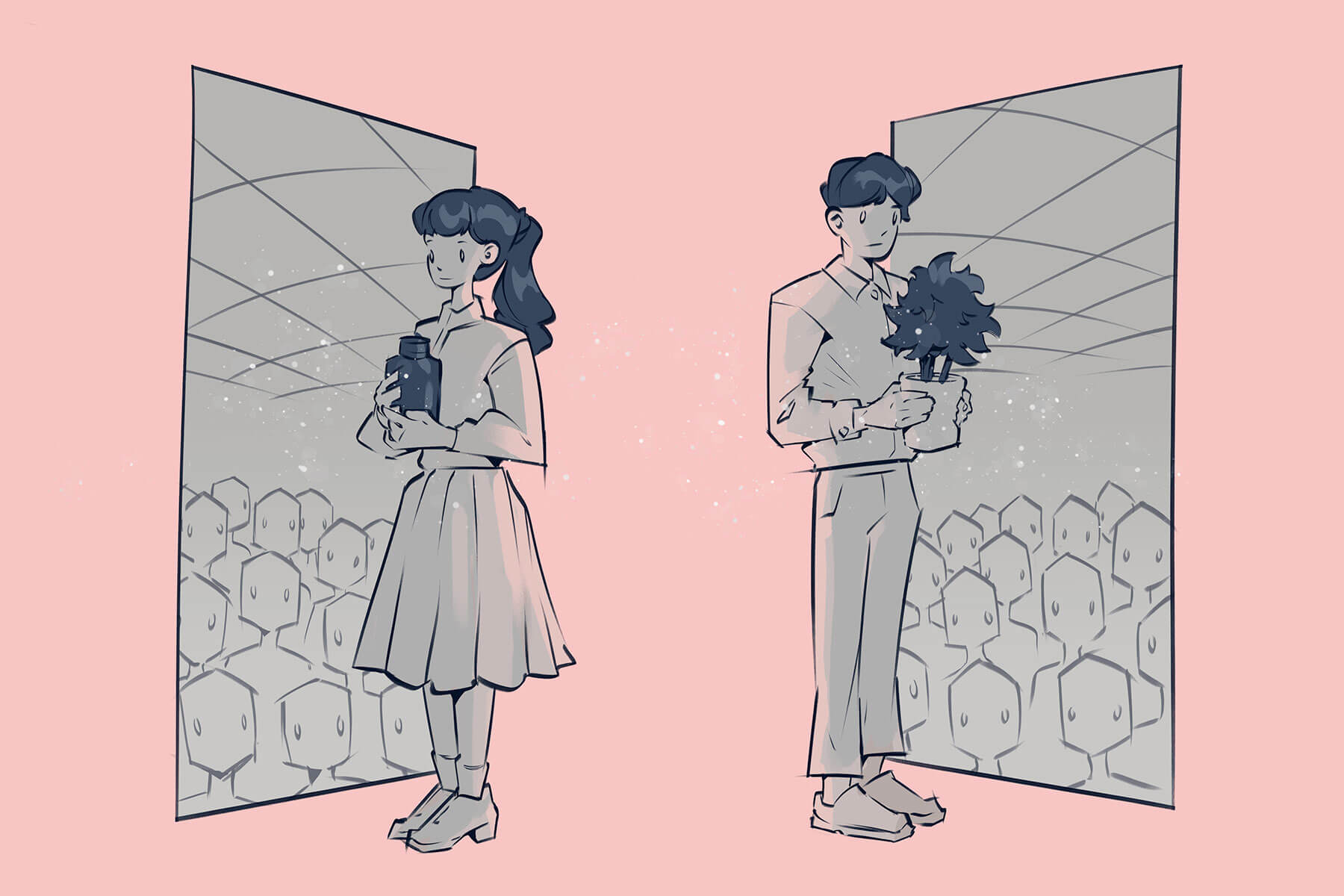
One of the main characters, Claire, played by Helen J. Shen, is a Helperbot 5 — a newer model than Criss’s character Oliver. We first meet her in the show when she knocks on Oliver’s door to borrow his charger. We soon find out that her battery has severely degraded and cannot hold a charge the way it once did. She is fully aware of the limits of her body. Both she and Oliver are retired, and for different reasons, are no longer of any use to their previous owners. If I take the creators of this show at their word, their casting of Shen and Criss was done on colorblind terms with no intention of political statements being made. But if Angela Pao is right about what nontraditional casting does to the world beyond the stage — disrupting notions of white normativity in life outside of the theater — then perhaps representation (when it does not reinscribe the white gaze) continues to be a potent practice, especially when it takes place in an historically white institution like Broadway. Bodies as much as performances become texts to be read.
As an Asian American, I have no choice but to read the histories that their bodies signal to me. I cannot disconnect the notions of racialized or gendered domestic labor or sex work. I cannot fully leave to the side the reality of Overseas Filipino Workers or the techno-orientalist sensibilities that animate our robot-ified portrayals. As an Unexpected Reader, I have been trained to read intertextually because most of the authors I have read or the films and musicals I have watched, like Castillo posits, did not have me in mind.
Perhaps the trouble that Asian Americans have tended to run into with the politics of representation is that we have treated it as an end rather than a means — representation that is aimed at fitting in, rather than disrupting and upsetting the current order of things in our world. Filipino American ethnic studies scholar Dylan Rodriquez argues that when the language and practices of representation (at least for Filipino Americans) are treated as an end, they are in fact a more insidious means to further assimilation — a stultifying staving off of an apocalyptic reckoning with the genocidal violence that inaugurated the joining of the words Filipino and American. Representation that is uncritical and untethered to something beyond acceptance or recognition only serves to pacify our longings and movements for liberation.
I wonder if the mistake I have made in my own thinking on this matter is that I’ve too quickly dismissed representation as a tool toward something greater. Whether in literature or under bright lights, representation, when unbound by the last gasps of white normativity and the white gaze, presses people to become Unexpected Readers of our world. It presses us to see ourselves, and read our own bodies, the histories that we carry, the stories that we bear, in new ways. This is perhaps the only way that representation can lead to something beyond all that currently is.
To name that “something greater” is a challenging and scary thing. But it is a worthwhile adventure to take.
“And no matter where and how far you drive
People say you're different when you arrive
Underneath an unfamiliar sky
Will my old concerns no longer apply?”
(Hitting the Road, pt. 1)
E. David de Leon (he/him) is a child of Pilipino immigrants and grew up in the San Francisco Bay Area. He currently resides in New York City with his wife and two sons, and is a PhD candidate at Fordham University studying Christian systematic theology and its intersections with Pilipino/Pilipino American history, colonialism, and decoloniality. He loves carbs (baked and eaten) and running (long distances, but slowly). IG/threads: @emmanueldl
Hi, I'm Andrew Yong, an illustrator and designer living in San Francisco. I like drawing people and exploring the wild. Find him on Instagram @jonadrew_.