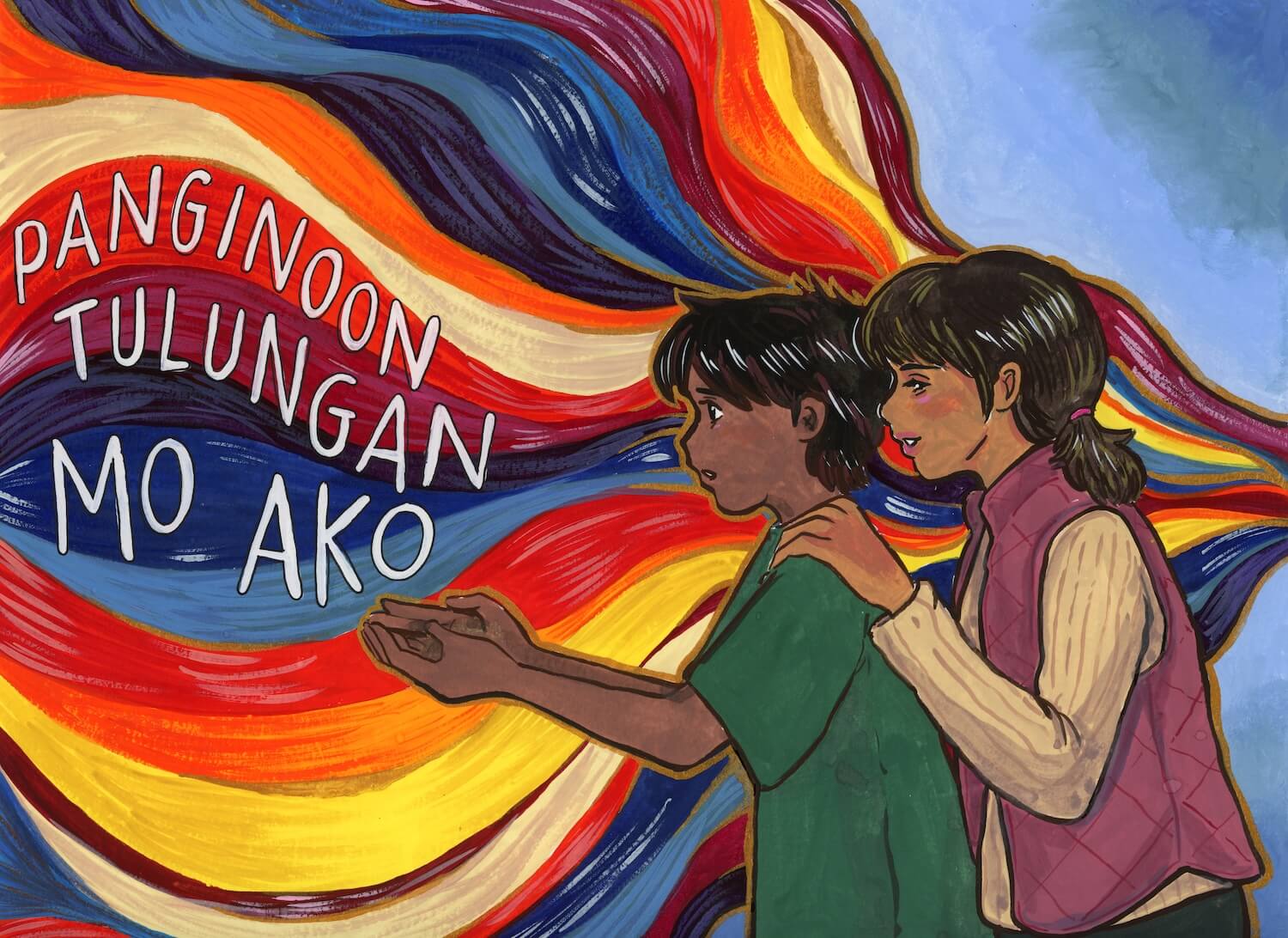
I tried to speak in tongues once. Some relatively long time ago, before insurrectionist presidents and short-form content, I was an amicably earnest yet hopelessly impressionable 18-year-old looking for ways to feel closer to God at my local suburban revival service. After a couple hours of improvised preaching/screaming and Bethel music, the night ended with an altar call for baptisms of the spirit and I came forward in hopes of finding undeniable evidence that I had been touched by the transcendent. In this particular attempt, that meant the spiritual gift of speaking in tongues. Lo and behold, nothing happened. I received prayer, followed instructions to repeat the first syllable that came to mind, did that for about 3 minutes then realized that no one other than myself was causing me to squawk unintelligible nothings(1).
I never tried speaking in tongues again — at least in the charismatic sense. But a couple years after that awkward night of the soul, I began trying to speak in a different sort of tongue: my family’s Mother language, Tagalog(2). This attempt at speaking in an actual tongue came with its own set of baggage though. Growing up, Tagalog didn’t feel very motherly. Such is the predicament for many of us born in the second generation and after, left to speak for ourselves in classrooms and playgrounds. I could never understand Tagalog naturally. The meanings weren’t unavoidable like the taste of ampalaya wrestling with my mouth or the smell of fresh fish in the kitchen. Whenever I heard Tagalog at home I knew that I wasn’t being spoken to. It never spilled out of me when stubbing my toe nor carry the catharsis of a cuss word. Trying to speak in my Mother Tongue felt like writing with my off hand — and whenever I did venture a brazen attempt at a word or two, my 1.5 Gen Fil-Am friends immediately laughed and called me whitewashed.
Thankfully, perhaps because of divine intervention and ancestral nagging, I still kept trying to learn Tagalog. With access to a great language school and a lot of practice from living in the Philippines for over 6 years now, I’ve been able to better converse with our Mother Tongue. I’ve listened to how her words aren’t tone deaf to the blues and minor keys, though they often pretend to be, unverbalized pain lying underneath reflexive body language and jabs done in jest. In the orchestra of mother tongues, I feel like Tagalog plays in the percussion section. Her syllables tap sentences like the contagious conversation of kick and snare or boom and bap — or 3/4 slap of a bamboo tinikling stick on a college Pilipino Cultural Night stage. Tagalog, especially Southern Tagalog(3), comes from deep in your belly. You shouldn’t speak it on an empty stomach, which might have something to do with “Kumain ka na ba?” (have you eaten?) or “Tara, kain!” (let’s eat!) becoming our most common way of saying “hello.”(4)
But my reclaiming Tagalog isn’t only the learning of a language. It’s also the learning of another self. This learning feels something like subconsciously remembering slumbering memories — like when my Tagalog inadvertently reenacts childhood recollections of my family’s mannerisms and verbal tics as they surface from under my skin. This is a self who is chronically sassy, has smaller measurements of personal space and is fluent in collective shame yet hardly conversational in individual guilt. A self who’s become a kuya scolding his neighborhood kids with a playful fervor then harasses them with the same gigil(5) his Lolo used to smother him with. This is a self I’ve met in meanings strung across inherited sentences that once confused me, as I’ve been learning sentiments and sensibilities sown in sinews like undeciphered birthmarks tattooed on my body that I didn’t always understand but have always been a part of me.
As Tagalog has become not just a possession but an entire becoming that I’ve received from my mother and those before her, I’ve come to believe that this self has always been somewhere in the tapestry of my imago Dei. That’s not to imply eugenic notions of essentialist purity or the problematic mathematics of trying to quantify “how Filipino” someone is, but it is to say that Tagalog has been showing me how much I’ve inherited from my family and their culture. An inheritance that big things like colonialism and assimilation tried to shame and erase but couldn’t actually get rid of, like the sinigang on our dinner table or the brownness of my body. From our ancestors to our elders, I believe that our image of divinity is made more whole by the lives lived before ours — even when we can’t understand or remember them. They are still part of who we are.
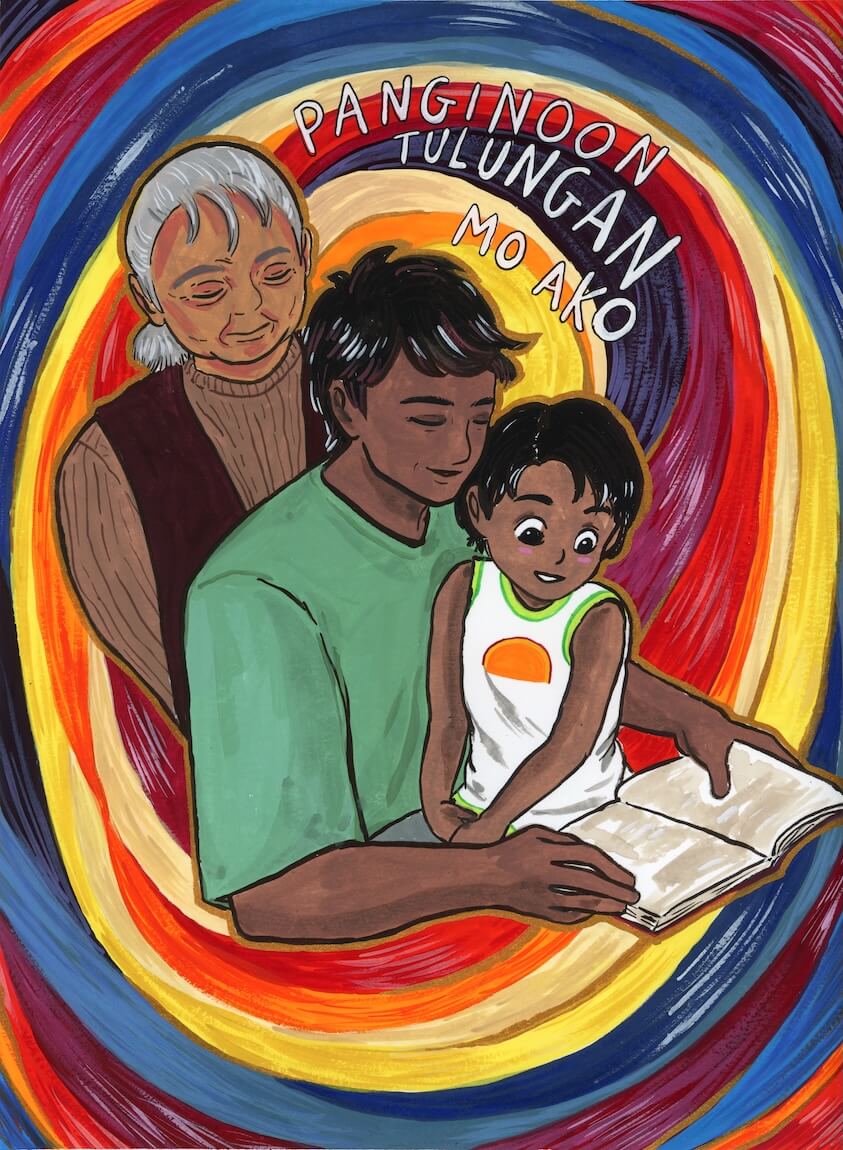
Speaking of which, learning Tagalog also allowed me to meet my Lola for a second time. Her wit and sarcasm lost in the translation of my childhood English have become blatant in our shared Tagalog. My ears have become better tuned to the chords of countryside melodies coloring the choruses of her Southern Tagalog accent. She punctuates her exclamations with the elongated baritone of an “Iya!” welling up from the depths of her soul and dots her question marks with a quirky “hani?” Though she moved her family away from it over 3 decades ago, her provincial hometown of Real, Quezon still resides in her every sentence. Even her children — who grew up in the Philippines learning Thomasite(6) English at school and now live Stateside, working in white collars while dining adjacent to even whiter complexions on the weekends — still revert back to a Southern Tagalog accent when they speak in their first language. If you have a conversation with them in Tagalog, you would think they never left Real.
Though, to be real, getting to know her — again — holds a mixed bag of wholesome moments and hurt feelings. My Lola isn’t the sweet, soft spoken and explicitly affectionate white grandmother that my childhood friends visited on weekends and holidays. She’s a hardass. She’s unironically blunt and a yet-to-start-recovering workaholic with the wherewithal to raise four kids in the rural Philippines, bring them across an ocean to work successful careers, and then decide that wasn’t enough and did it all over again with her husband and eldest daughter, raising me — an American-born, little Filipino prone to tantrums of disrespectful English and toxic masculinity fit for the primetime of Fox News. She’s basically the 90’s Michael Jordan of grandmothers. And now as a less toxic and more respectful adult thanks to her grandparenting, I’m more than grateful that I picked up enough of our Tagalog to better get it when my Lola so inevitably speaks her mind — even when her mind unflatters me for being unreliable in the kitchen and assumes (somewhat accurately) that I don’t make any money. Until all’s said and done and thereafter, this is my Lola that English didn’t tell me much about. A Lola who denies that she cried at my wedding and needs no translation when I make her belly laugh in Tagalog.
And so this other self that I’m finding through Tagalog is not incarnated in isolation. It is enfleshed in the ecclesia of community. It is brought out of me by others, like irrepressible laughter triggered by Filipino humor that used to feel more foreign than funny but now fills hangouts with my closest friends and the sweet roastings rallied between me and my Waray(7) Pilipina wife. In our Tagalog, I hear another self that I am becoming with my people.
What’s more, this self feels more authentic when I’m no longer translating how I feel in English and instead am simply feeling in Tagalog. Like describing a color I haven’t seen before or the sound of a note between B and C, learning my family’s language has given me words to express things that I could not otherwise bring outside of me.
That’s what it felt like the first time my Mom prayed over me in Tagalog. While my Mom has always prayed for me on a more than regular basis, on a particularly desperate night of intercession I asked if she could pray in Tagalog instead of her usual English. As soon as she did, it felt as if something else had escaped from within her. In that moment she taught me a simple yet sacred prayer of “Panginoon, tulungan Mo ako” that said more than “Lord, help me”. It sounded less like calling upon a deity and more like calling for a parent. Ironically, her prayer was probably an even more authentic expression of “speaking in tongues” than whatever that revival service was trying to baptize into me years before. A prayer that, for all the incarcerated words of colonialism and performative religiosity, incarnated into words my Mom’s longings and desperation like only our Mother Tongue could.
Admittedly, while I cannot claim our language in the same way that my Mom does as a native speaker, I do believe that learning Tagalog is also my inheritance from her. Because of my Mom, Lolo, Lola and those before them, Tagalog belongs to me in ways that English never will. It may not be the language chosen for me to speak first, but it is the language that I now choose to speak for myself. After all, that is what it means to be a heritage learner.(8) We carry the weight of inheritance in these words that have been passed down to us. They aren’t just another language. They are the tongues of our mothers and foremothers speaking once again in us.
As I inherit my Mom’s prayer of Panginoon, tulungan Mo ako, I do so in hopes that I can do more than just translate my English prayers. I want to release the same faithful longing that she did, to bring out that which is being born again in me through this speaking in Mother Tongue. So even as colonial histories and realities of inequitable suffering have made it harder for me to pray, perhaps I can still approach the God that my younger self wanted to at that altar call all those years ago.
Having grown up with multiple eras of denominational preferences, I’ve seen how our English Christianese(9) and corporate spectacles are oftentimes unspoken euphemisms for status and transaction. But even as this evangelical lingua franca may tempt us with the clout of social currency or the dopamine rush of commodified spirituality as the worship team plays yet another Elevation Worship/Bethel/Hillsong song, speaking in the tongues of our mothers and lolas can instead talk us into the conversation of communion. A communion that sounds less like the chaotic babblings of Babel and more like the harmonizing chorus of Pentecost in Acts 2. A communion that forgets clout and consumption, that even forgoes attempts to capture some static, biblical absoluteness that can fit the infinite and eternal into the finite and perishable — and favors a more lifelong, collective knowing of the endlessly knowable.
So in a sense, maybe I’m learning how to “speak in tongues” after all. And in speaking this tongue that now feels more like mother, I may even find other names to call god, other prayers to better pronounce our pain. So that like with my Lola, I can meet the Divine again — and again.
(1) Not unlike the President’s senior spiritual advisor, Paula White.
(2) Tagalog can be synonymous with “Filipino”in its standardized iteration as an official language of the Philippines (alongside English) that excludes the archipelago’s many other ethnolinguistic groups from institutionalization.
(3) An ethnolinguistic group and variation of Tagalog spoken in provinces of southern Luzon, including my family’s home province of Quezon.
(4) See Red Ollero’s Netflix comedy special, Mabuhay is a Lie.
(5) While I’m unaware of any exact translations, gigil can be described as an expression of aggressive affection — a more benevolent version of what happens in the Key & Peele “Cute Puppies” sketch.
(6 )Referring to the English originally taught by “Thomasites”, American teachers who began traveling to the Philippines in 1901 through the St. Thomas transport company as part of the United States colonial project that introduced a nationwide public education system in an effort to pacify Filipinos under President McKinley’s policy of “Benevolent Assimilation” that also established English as an official language of the Philippines.
(7) A Philippine ethnolinguistic group in the provinces of Samar, Eastern Samar, and Leyte in the Visayas Region.
(8) Someone who learns their family’s language as a non-native speaker.
(9) Especially in Metro Manila, many Evangelical churches in the Philippines conduct their entire services in English.
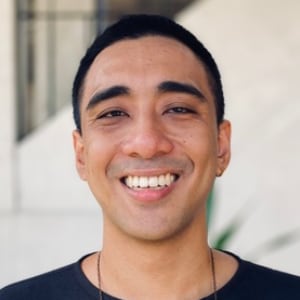
Timothy Sean Ignacio (he/him) is a 2nd Gen Filipino-American from California. In 2018, he moved to Quezon City, Philippines to live alongside and serve a working-class community with the Non-Government Organization, Servants to Asia’s Urban Poor. As a creative and musical artist under the name “ITM” (reiteration of the Tagalog word, “itim” meaning “dark”), he also uses his creative work to express his musings and advocacies around his decision to move to his family’s Motherland. You can follow him on Instagram, TikTok, YouTube, and Spotify @sobrangitm.

Grace Chou Hoover (she/her) is a classically trained pianist turned illustrator based in northern Delaware. She primarily works in watercolor, gouache, and acrylic paints and draws heavy inspiration from the storytelling geniuses of Hayao Miyazaki and Mamoru Hosoda. Grace enjoys creating pieces that tell stories of human connection, particularly through themes of childhood, family, and heritage. Her work has been featured at national faith-based conferences and for sermon illustrations spanning both East and West coasts. When she's not drafting graphic novel pages for her current passion project, Grace serves as the worship arts pastor at Trinity Community Church. See more of her work on IG @weiweihoover