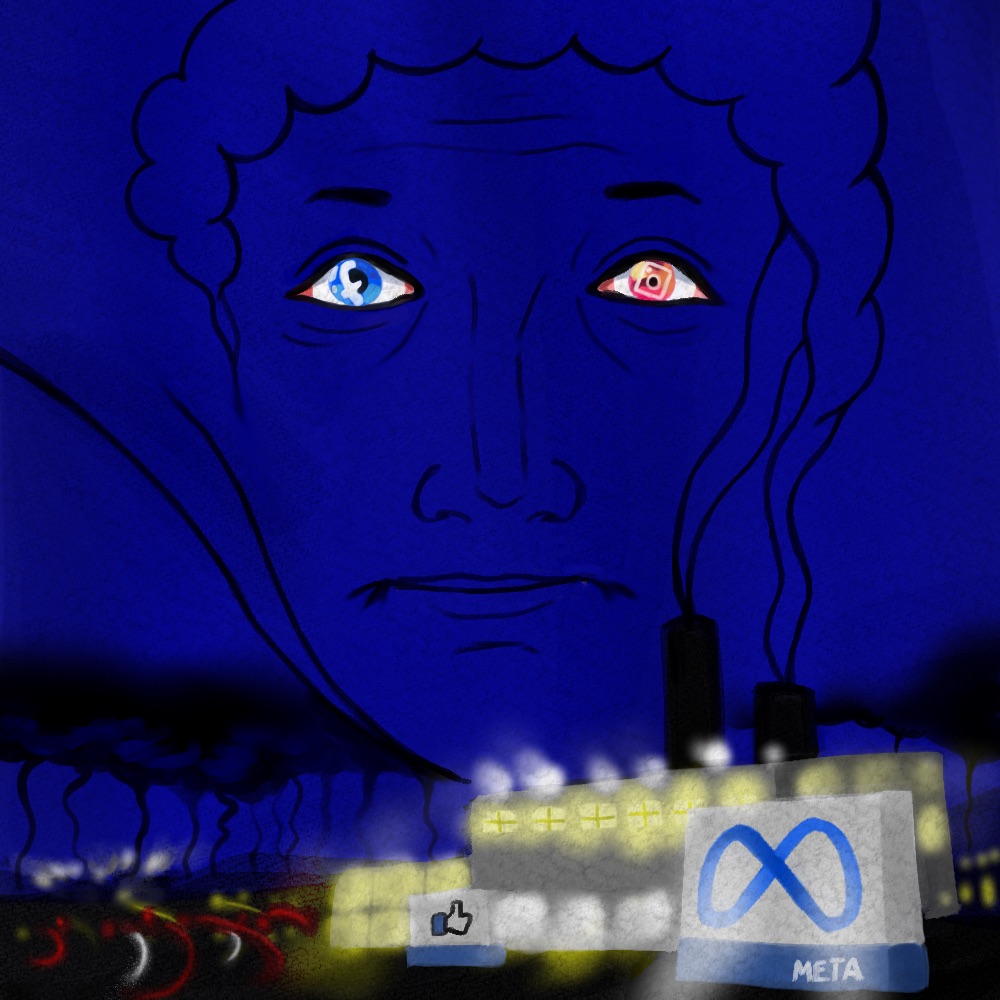
Sarah Wynn-Williams opens her searing new memoir with an epigraph from The Great Gatsby: “They were careless people, Tom and Daisy — they smashed up things and creatures and then retreated back into their money or their vast carelessness, or whatever it was that kept them together, and let other people clean up the mess they had made.”
In Careless People, Wynn-Williams suggests Silicon Valley as the digital doppelgänger of Fitzgerald’s East and West Egg. Tom and Daisy smash things up; Mark and Cheryl “move fast and break things.” Jay Gatz ascends through bootlegging, “business gonnegtions,” a lack of regulatory oversight, and a long-term confidence game; Meta similarly debuts and reinvents itself by exploiting the gray zones of states, markets, and human desire.
That same libidinal thrill, desire, has long been at the heart of Facebook, from its skeevy predecessor FaceMash, which Zuckerberg created to “rank the hotness” of women on campus, to its relentless hounding of our attention today. We are only beginning to understand the costs that these pleasure-seeking technologies exact — the warning that a clergyman once issued Romeo (recycled by techy sci-fi), comes to mind: “these violent delights have violent ends.” Wynn-Williams convincingly documents Facebook’s evolution from a machine that simply ruined marriages to one that can despoil democracies, abet genocide, and savage youth mental health.
Postmodernism has been defined as skepticism towards the overarching stories that once defined public life; this “incredulity towards metanarratives” provided fertile soil for Meta to sell its snakeoil, promising cathexis and connection. Wynn-Williams, a self-described whistleblower, adds her voice to the growing chorus insisting that these platforms have instead commissioned social arson, cheapened authenticity, and made us all a bit more lonely and brittle.
But Wynn-Williams was drawn into Facebook during its halcyon days, describing the relief and emotional catharsis the site provided her in a moment of abject terror. After a devastating earthquake in Christchurch, her neighbors and classmates instinctually posted on the platform to share lightning-fast updates with their loved ones. Before traditional news outlets or government agencies could respond, Facebook offered ordinary people a place to turn to find out who among their loved ones had been buried under the rubble.
Wynn-Williams rounds out her origin story detailing an uneventful upbringing in a small town in New Zealand, apart from a near-lethal animal attack that ruptured her childhood. (The book’s cover, a shark fin sticking out of a pool of water, nods to both that trauma and the cold-blooded corporate predators to come.) After pursuing legal training and building a lauded career in public diplomacy, Wynn-Williams leverages personal connections to hound Facebook executives until she lands her “dream job,” pitching the firm’s need to operate more deftly as a non-state actor on the world’s stage.
Careless People is not just a memoir of professional disillusionment, it is an accidental case study in whiteness, moral complicity, and the seductions of racial innocence in the age of surveillance capital. As with narrator Nick Carraway in The Great Gatsby, Wynn-Williams styles herself as a self-aware outsider, offering a tantalizing parvenu’s glimpse of the anxious, self-mythologizing world of the nouveau-riche. Her star-struck naïveté erodes into weary disenchantment as climbing sycophants and dutiful apparatchiks, who cynically maneuver their company to more and more commanding heights. The plunder and surveillance are sweeping yet hyperintimate in scope: in one incident, staff boasted to advertisers that they could micro-target young girls when they deleted multiple selfies. These teens were then flagged as potential marks to be sold weight-loss and beauty products, indexed as feeling “worthless, defeated, useless, overwhelmed, stupid.” These quotidian betrayals — accounts of optimized, automated cruelty — bring to mind Hannah Arendt’s observation about “the banality of evil.” Even as the company harms real people, it accomplishes its purpose through a boring, lethal proceduralism in which no one — not advertisers, staff, leaders, or users — is ever truly responsible.
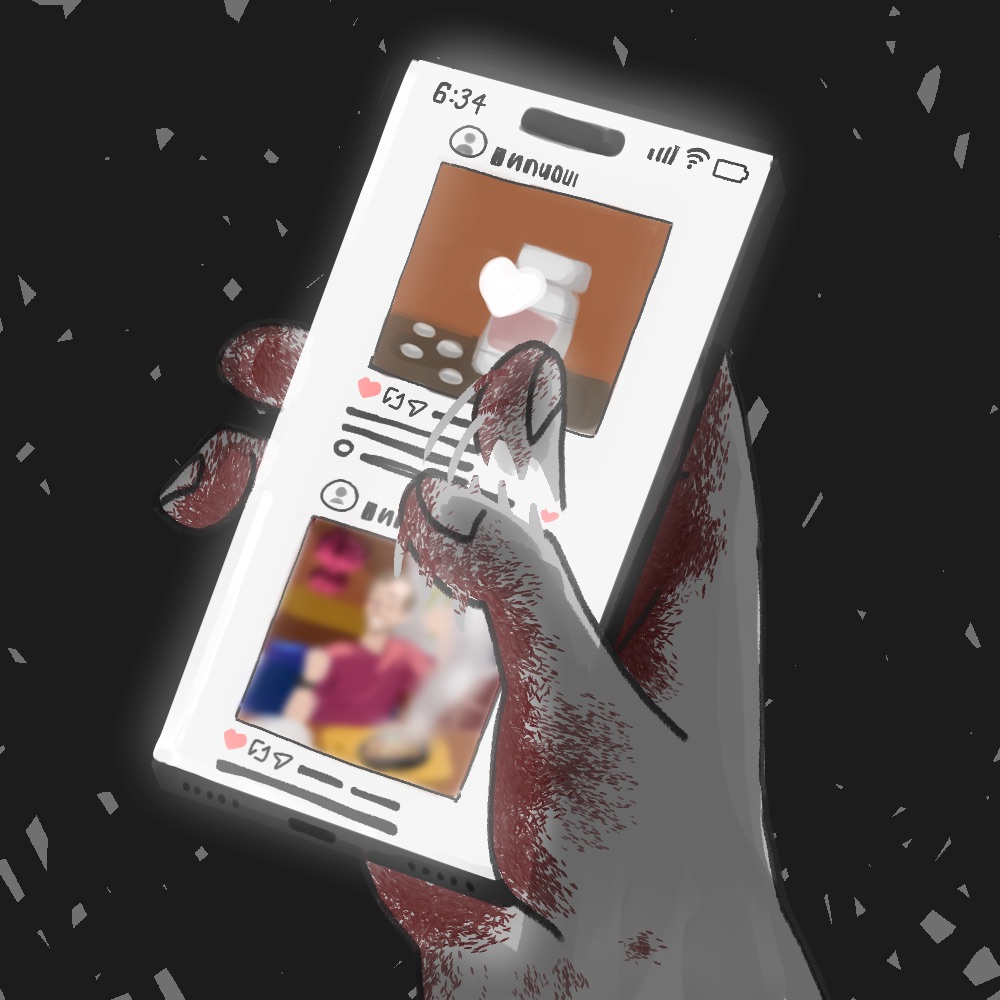
My dear friend Claudio Carvalhaes once told me that anyone who has even a checking account with Chase Bank is implicated in the wider system of economic oppression: knee-deep “in the belly of the beast.” Perhaps the same can be said for everyone who still has a Meta account. Under the entanglements of imperialism and capitalism, evil operates diffusely, distributing our ethical responsibility in a maddeningly fractal way. Despite our best wishes, our very manner of life continues to draw more death into the world.
Such diagnostic thinking should be sobering, not fatalistic. Many faith traditions hold that making our predicament speakable can help us begin to chart a path out into another kind of world. One example is the sacrament of confession, an ancient practice of taking accountability in the presence of God and others, or even practices like the Ignatian Examen, in which we prayerfully reflect on our past actions, taking seriously the injunction to let the one who is without sin cast the first stone. Ironically, some early Facebook usage — and much of the embryonic blogosphere — could function in this way: providing a stage for individuals to offer open reflection and seek connection across gulfs of difference.
But any such sort of self-inquiry — about her own social location, agency, or complicity — escapes Wynn-Williams, whose writing veers towards autohagiography: enshrining her own sainthood while casting those around her as cartoonishly, foppishly evil. To be fair, some of Meta’s actions are indeed cartoonishly evil. But her one-dimensional portrayal of every authority figure — from theatrically inept parents to oblivious bosses — undermines her credibility as a narrator. As other reviewers have noted, this posture risks rendering Wynn-Williams as a Pilate-like figure: hands wrung, mysteriously clean — whistleblower absolved of the need to reflect by virtue of a martyr’s credential.
Many reviewers have focused on Facebook’s attempts to suppress the book’s manuscript, or the credible accusations of sexual harassment against the unctuous, racist executives Joel Kaplan and Sheryl Sandberg —themselves entangled ex-lovers from the FaceMash era — whose abusive behavior likely instigated Wynn-Williams’ ultimate dismissal. Like The Great Gatsby, I suspect that Careless People will likely not be primarily remembered for its racial politics, although both texts are drenched in contemporary discourse about race and at times fall into unfortunate tropes.
In one of the novel’s early scenes, bully Tom Buchanan fumes about Japan’s defeat of Russia and “the rise of the colored empires.” He warns that “the white race will be utterly submerged.” Daisy winks and whispers: “we’ve got to beat them down.” Nick, our narrator, listens politely and demurs; class interloper he may be, but his whiteness serves as currency and credential, granting him unfettered access to these rooms.
Wynn-Williams benefits from a similar geography of racial affinity: Christchurch doesn’t seem nearly as far away from Silicon Valley as, say, Port-au-Prince. This isn’t “passing,” it is whiteness as Global Entry. She takes obvious pleasure in portraying her hustle — from cold-calling tech execs to bluffing her way into high-level Global South meetings — as tenacious girlboss moxie, not privilege. Neither she nor Nick is particularly curious about how the invisible knapsack enables the invisible hand.
This aligns with the author’s habit of deracinating terms like “foreigner” and “immigrant” to imply powerlessness — even as a wealthy tech executive and New Zealand’s former “top envoy to governments around the world.” At a time of ICE terror against the “perpetual foreigners” in our midst, Wynn-Williams attaches these terms to herself to evoke precarity — while giving her debut book interview to the white identity politics grievance rag The Free Press. (Perhaps Hawaiian sovereignty activist Haunani-Kay Trask was onto something when she argued that the word immigrant is “just gloss for settler.”)
Wynn-Williams’ embrace of racial othering shadows the entire book. She repeatedly invokes the specter of the “Chinese Communist Party” less as political analysis and more as a kind of racial shorthand for monolithic Eastern authoritarianism. She indulges winking, extended bits like calling Xi Jinping’s security detail a “human Chinese wall” — get it? — or describing Central Americans in indigenous attire as looking like “members of a primeval Ku Klux Klan.” On Sandberg’s orders, she “[hires] a Filipina nanny,” but doesn’t reflect on how women of color’s domestic labor upholds white women’s career ambitions. Most menacingly, in an uneasy sleight of hand she recounts a colleague’s advice that she will never belong at Facebook because she is not “a Jew who went to Harvard” — laundering a patently anti-Semitic comment into the claim that she is the real cultural outsider.
Jarringly, one of the book’s most profound moments of insight comes to us from the mouth of Sheryl Sandberg. In a moment of candor, Sandberg outlines the predictable clockwork of wealth in Silicon Valley: first, one gains a fortune, then “exotic travel for a year or more before becoming bored of that, then transitioning to getting very fit or some other personal goal.” After that, a boat or another extravagant hobby, and finally a divorce or another personal crisis, followed by a start-up fund or philanthropy.
It’s a deadening portrait of luxe nihilism that recalls both Claudio’s warning and Arendt’s famous phrase. All the expensive bling and the whole vapid cycle of accumulation is ultimately unoriginal, banal, hollow. There is nothing new under the sun, digital pleasures are fleeting, and great evil is commissioned by the busy little bees, lethal drones disguising thoughtlessness as duty. Arendt’s point is that careless people don’t have devils’ horns and hooves, they wear military uniforms, power suits — graphic tees and hoodies. They unselfconsciously interview genocidaires and proffer delusional fantasies of persecution, a part of the same attention economy and ecosystem of atrocity in which we too live and move and have our being.
Wynn-Williams closes her account by turning her lens to these death-dealing others: “The more power they grasp, the less responsible they become” — we all live in a “world that has been shaped by these people and their lethal carelessness.” But shouldn’t it be “we”?
As one former colleague of Wynn-Williams wrote, the book reads as if “she was an island of one.” Above all, it’s this self-reflection that blunts the force of her work. In drawing a hard line between the witnesses and the villains, she erases our own inescapable complicity in evil, our deep-seated tendency to default to carelessness and apathy in a distracted time. In the words of the old “corporate confession,” we have caused harm both “by what we have done and by what we have left undone.” This is especially true of those of us living in the imperial core, and even more so for those of us who still are still social media users, fiends requesting the next dopamine hit. I’m still on Facebook, after all — I’ll probably share this article there.
Like Gatsby, we believe in the green light (the status indicator showing when your crush is online). No story, Author, or metanarratives here — just endless scroll, bobbing avatars, unanchored desire. It eluded us then, but that’s no matter — maybe the next update will give us the fix?
So we beat on, bots against the current, streamed back ceaselessly into the feed.

Kenji Kuramitsu (he/him/his) is a writer, clinical social worker, and chaplain living in Chicago, IL. In his spare time, Kenji enjoys flossing and playing video games — not always at the same time.

Matthew Ng is a Chinese-American digital illustrator born and raised in the Bay Area. In 2022, he graduated from UC Davis with a BA in Cinema and Digital Media. Matthew currently resides in San Francisco where he continues to make art.