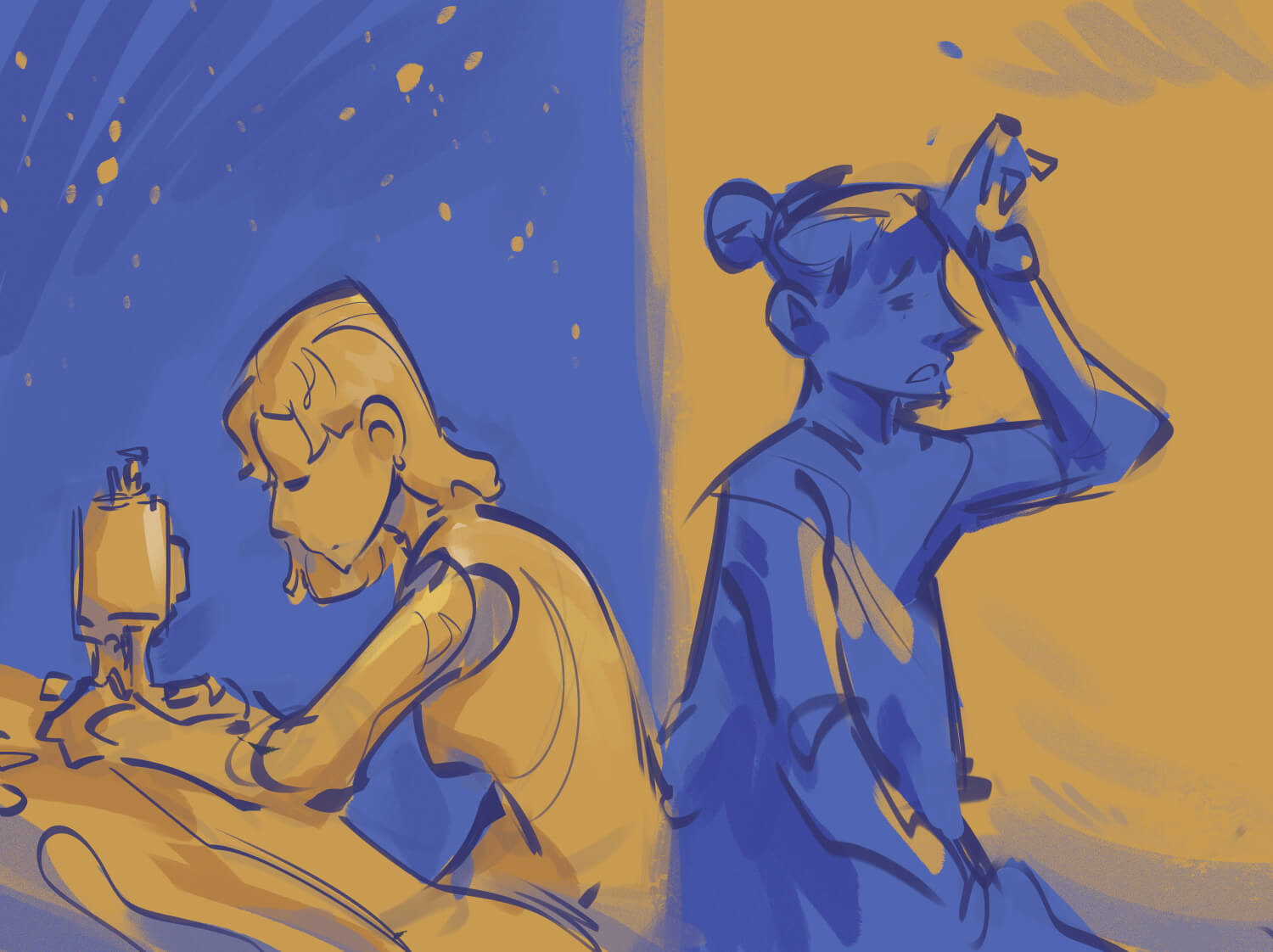
My family made it in America. I don’t say this lightly, as I have been learning to bear the generational weight burdening these heavy words. As told by our family once upon a time, my Lola learned how to turn night into day in our provincial hometown of Real, Quezon as she worked tirelessly to make dollars out of pesos while sending her daughters to school in handmade dresses sewn from chicken feed sacks — all so that my mom could one day don a white-collared doctor’s coat. Eventually, because of my Lola’s sacrifice and mother’s success, the fruits of their labor would include my falling from our family tree 7,000 miles away from Real, never to know the clawing of chicken feed sacks brushing against my bare skin nor the pinching pangs of a stomach left half empty.
Stories like this have become a treasured inheritance — my pamana — that I’ve been gifted with in reclaiming our mother tongue, enabling me to routinely interrogate my Lola for family lore in our now Tagalized conversations. This has all felt like the storied oral traditions of legend, like the substance of scripts that performative Hollywood diversity stunt artists would pay a pretty penny just to whitewash. These will be among the family heirlooms I hope to someday pass on to my own children and grandchildren – or to whoever will listen to them.
At the same time, as time itself has changed my politics and theologies raised by the privileged bubbles and protective insulations of a family that “made it” in America, I’ve come to think more about all those families that didn’t. What about all those other Lolas who worked just as hard as mine, who also turned night into day for their family’s better tomorrows, but still weren’t able to raise them into breadwinners and model minorities? What about the other single mothers who are unfathomably loving and reliable providers like my own, yet are paid so much less?
Maybe Hasan Minhaj was right.(1) Our families are like the rappers that made it — well, at least for my family, that’s what our making it feels like. It feels about as unlikely as the success of a JAY Z in Brooklyn’s Marcy Housing Projects or a Kendrick Lamar in Compton’s Section 8 neighborhoods. After all, the Global South has too many of its own good kids who never make it out of their m.A.A.d cities. But like these celebrated artists and athletes, our migrant families leave behind less celebrated communities that we couldn’t take with us. For every one of our Filipino families living the fabled “American Dream” and perpetuating model minority myths, there are thousands that never will. These are the families giving the world its construction workers, custodial staff, and domestic laborers — the families giving up their mothers for paying customers to consume their mothering. They are the people making our houses and homes. But despite their foundational contributions to our global economy and personal lives, these families remain on the other side of our immigrant success stories and Netflix comedy specials.
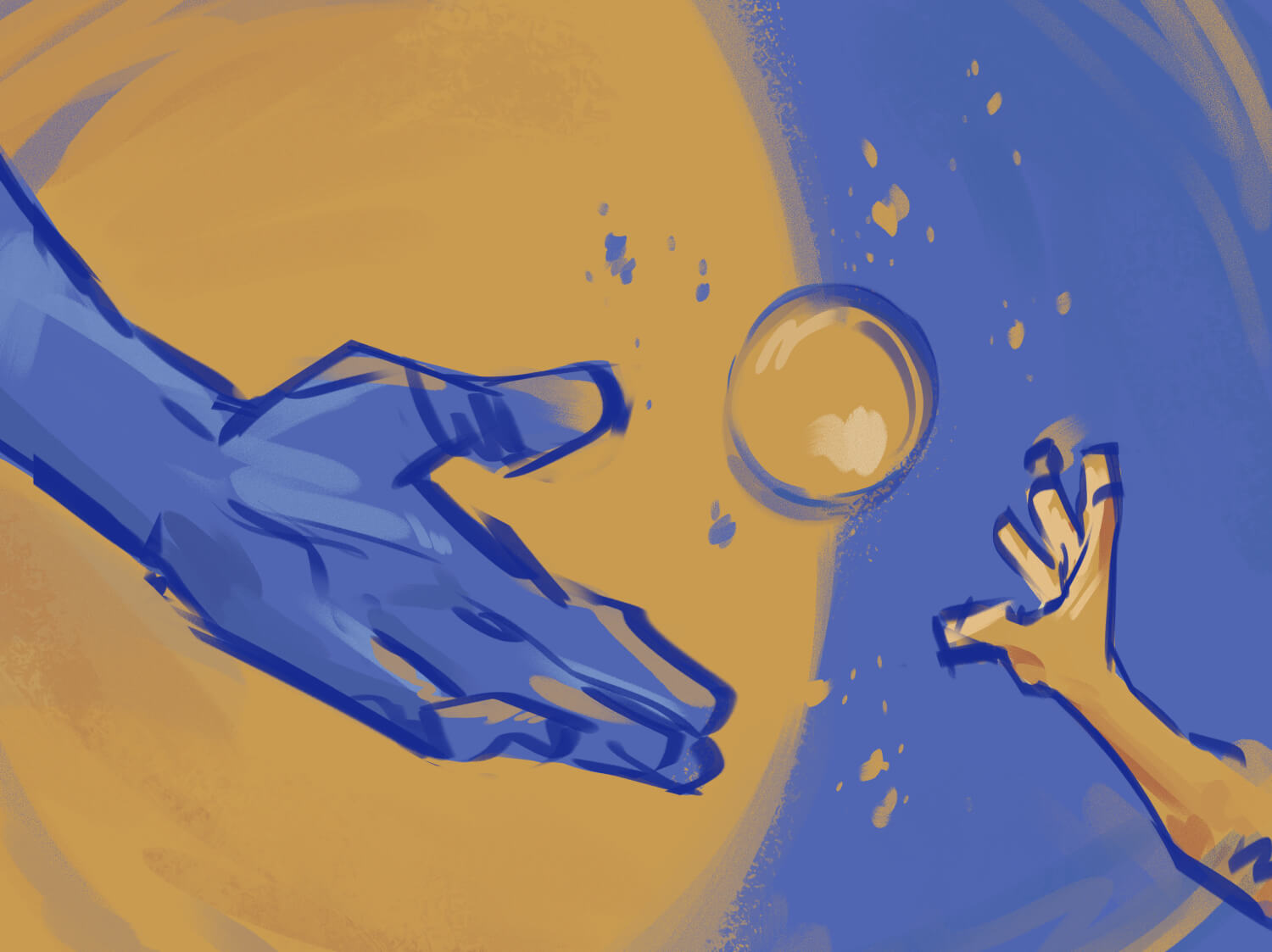
Like most of us, I possess neither the capacities nor the competencies needed to change any of this. But what I do have I chose to give in December of 2018. I moved to the Philippines as a balikbayan (2) to live among and serve a working-class community of Quezon City, Metro Manila with a faith-based organization doing incarnational ministry work.(3) Reclaiming my identity as a balikbayan — not missionary — in my family’s homeland has been an attempt at decolonization and self-discovery as well as solidarity and service. So while it is utterly true that neither I nor anyone else as a single person can get these families out of whatever they’ve been forced into, I felt that the least I could do was choose to be with them in it — regardless of how uncomfortable, unsanitary, or existentially unnerving as it all turned out to be.
But damn, is it hella hot out here. I don’t care what anyone from Southern California or anywhere in Texas says: Majority World heat is otherworldly. And yet, the amount of heavy humidity that Filipinos in Metro Manila may or may not carry on the regular is, to be real, a regulation of classist realities. This is a nation of haves and have-no-air-conditioning. From workday commutes to weekend leisures, such a basic “First World” appliance aptly summarizes so much of how intricately segregated Filipino lives are. What’s more, there is a sad, theological irony in the world of difference lying between our many air-conditioned, consumer-friendly congregations (4) and the many more working-class neighborhoods like mine bearing the brunt of climate-changed degrees in Celsius every day of the week. And yet while so much difference lies between them, there isn’t nearly as much distance from one to the other.
Armed with my overpriced and undercompensated social sciences degree, I came here with some level of competence to measure the depths of these differences before me. These are the exploitative and extractive economics of uneven development and plutocratic globalization from my college lectures and textbooks that now accost me in the flesh. I see firsthand how the inequitable actualities of my working-class neighbors are products of industries built by Western capital and cheap Asian labor, with machineries and monopolies of the Global North founded on a workforce in the Global South kept among the world’s most overworked and underpaid.(5) Currents of capital flows and tides of market trends — pushed and pulled by multinational corporations and multilateral banks — perpetually force my neighbors to wade towards increasingly peripheral and precarious waters in the ballooning margins of the Metro. This is the oceanic distance of diasporic difference between our making it in America and my neighborhood friend here in Quezon City asking, “Bakit kami ganito kahirap?” — Why are we this poor?

Somewhere in my subconscious, I assumed that moving closer to these realities would ease my survivor’s guilt in our family’s escape of them. But my attempts at naming and approaching all that distributes disproportions of heat and hunger on my neighbors has felt like much too little. They are still out in the heat; they are still hungry. Now, I just happen to know their names and faces. I see my neighborhood’s small children, our mga Batang Riverside, when I read big words like Neoliberalism and The World Bank. I think about how they are forgotten by these foreign nothings. It pains me to my innermost being, and so I habitually turn to apathy and jadedness to numb this part of me. Too often, I selfishly feast on a meal that my neighbors can’t afford rather than fast in prayer and protest for the end of their hunger. It’s much easier, after all, to forget the pain than it is to meditate on and move from it.
And yet, on my best days, I find a faith that the very privilege of carrying this pain in the depths of my deepest self holds a connectedness that I couldn’t always grasp. This is the sacred pain of a shared loób. Evoking its imagery of the body, the late evangelical theologian George Capaque (2008) sees loób as the self being realized as it opens up to the Divine and imago Dei. I cannot become my whole self, by myself. I become more fully and freely who I really am when I live in this shared loób with my people, as painful as it can be. Like the intimacy of a mother’s umbilical cord cradling her child, no amount of apathy, jadedness, nor any of my other guilty pleasures can sever this inexplicable grip from down within me that still clings to the people of my motherland. Even Fil-Ams without proficiency in the language have a fluency in this collective embrace of loób somewhere in their bones and ancestral memories that keeps us holding on, like desperate children tearfully reaching for their OFW (6) mother at the airport before another departure. Wherever we find ourselves in diaspora, this sense of visceral, bodily connectedness tends to find us. And if we listen to it, I believe that it speaks of útang na loób.
Rooted in loób, the value of útang na loób (7) is a cultural practice and expectation of reciprocity for a favor. It is a weighty phrase, too strenuous for the tongue in cheek. In its best iterations, útang na loób provokes feelings heavier than gratitude, more inevitable and fulfilling than obligation. It’s what turns inside of me at the impossibility of ever leaving my aging Lola or mother in a nursing home. But útang na loób isn’t just about me and my family. Interpreting it as a mutuality of indebtedness petitioning for all persons and parties against unequal power relations and unjust differences, feminist theologian Agnes Brazal (2022) makes útang na loób about all of us. This is not charity, but a debt of human solidarity — especially for the oppressed and marginalized — that we owe one another because we are all inextricably and inescapably bound to each other in the image, in the loób, of the Divine.
So truth be told, I didn’t come here to the Philippines because I caught philanthropic tendencies or a savior complex. I went back to the land my family left because I feel this útang of loób for our people still here — and I continue to stay because of support from my generous friends and family. This is our attempt to pay the debt of sharing my whole self with these families that still haven’t made it. The maddening pain in witnessing all that they lack, the unspeakable joy in sharing their celebrations: All of this is útang na loób. And while we cannot all pay this debt the same way, our small yet meaningful efforts of mutual indebtedness move us closer to this gospel, not of who I am or who you are, but of who we, together, really are.
If I ever get to publish a memoir, I know what I’ll title it: Gagawin Kong Araw ang Gabi. “I Will Make Night Into Day”. These are the words my Lola told my mom when she tried giving up on her dream of becoming a doctor once she found out how expensive medical school was. “Don’t worry about all that. You just study hard and I’ll handle everything else, even if it means working through the night as if it’s already day. Gagawin kong araw ang gabi.”
But I don’t want our memoir to end here. I don’t want another immigrant success story. If the pages behind the cover read like all the other books in the library of “making it”, my people won’t read them. They don’t need another happily ever after of American Dreams and white suburbs. There are still too many pages left for our families living in the day of their better tomorrows because of all the others still working through the night. So as the grip of loób keeps us writing. Maybe this is the next chapter for our families after they make night into day.
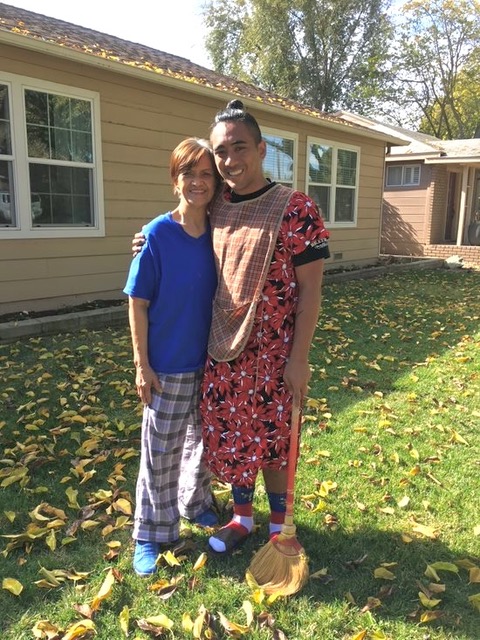
While the families we left behind continue to give so much to the world only to be given back so much less, we still owe them the debt of our umbilical-bound loób inviting us to dream of more than the Western promises of upward mobility and disposable income that keep pulling us further away from each other. But like good news disguised as a parable, partaking in this mutual indebtedness carries an unearthly truth that sharing our loób brings us all into the same being — into one body with many parts — stretching across oceans of diaspora and difference. And as we pay this útang of loób, we do so in prayer and protest that this long night will finally be made into the long awaited day, when it won’t just be our families that made it. Gagawin kong araw ang gabi.
(1) Hasan Minhaj: Homecoming King (2017)
(2) While literally translated as “returner” or “one who returns to their land” and historically used for Filipino migrants born and raised in the Philippines who have returned to their homeland after studying or working abroad, I claim balikbayan as both an act of nuancing my identity politic in the context of diaspora and reclaiming my heritage in the land that my family once called, and in many ways still calls, home.
(3) "Incarnation” https://servantsasia.org/who-we-are/principles/
(4) Many of these are actually located inside shopping malls to make them, quite literally,“consumer-friendly”.
(5) This is why I prefer the term “working-class” over labels like “urban poor” and “underprivileged” when speaking of my community, as the former better recognizes their essential contributions to both the economy and social life.
(6) Overseas Filipino Worker.
(7) Can be literally translated as “debt of gratitude” or “a sense of indebtedness from one’s whole being”.
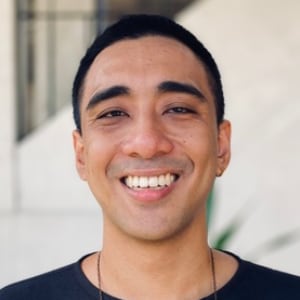
Timothy Sean Ignacio (he/him) is a 2nd Gen Filipino-American from California. In 2018, he moved to Quezon City, Philippines to live alongside and serve a working-class community with the Non-Government Organization, Servants to Asia’s Urban Poor. As a creative and musical artist under the name “ITM” (reiteration of the Tagalog word, “itim” meaning “dark”), he also uses his creative work to express his musings and advocacies around his decision to move to his family’s Motherland. You can follow him on Instagram, TikTok, YouTube, and Spotify @sobrangitm.
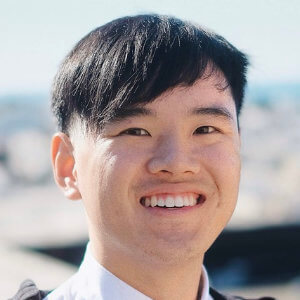
Hi, I'm Andrew Yong, an illustrator and designer living in San Francisco. I like drawing people and exploring the wild. Find him on Instagram @jonadrew_.