
Oftentimes, when friends and loved ones are going through difficult times, we donít know how to help them. Marriage and family therapist Ken Yabuki shares how the simple but powerful act of listening can make a big difference.
GRACE: Who can benefit from counseling?
KEN: I think everybody can benefit from counseling and therapy but there’s a stigma in some cultures. The general American public is more open to it and sometimes it’s even prestigious to have your own therapist. In Beverly Hills, you’re supposed to have a therapist. But in other cultures, for example, Hispanic, they don’t really think that it’s necessary to go to a therapist.
Asians are becoming a lot more open but there’s a stigma with “you can’t handle your own problems”. It’s an admission of weakness.
GRACE: How were you exposed to the power of listening?
KEN: I became a Christian in my freshman year of college in Japan. I became very excited about the Christian faith and I became somewhat of a campus evangelist. I used to tell fellow students that they should become Christians because when you become a Christian, every problem can be resolved. I maintained this naïve belief for the rest of my college days.
When I graduated from college, I felt called to go to seminary. In the fall of 1961, I arrived in Pasadena, California to begin my studies at Fuller Theological Seminary. It was a new experience. Even though I did not have language problems because I was an English major in college, it was still a new culture. I began to have struggles but I still maintained that I should be able to overcome my problems by my faith in God.
One day a fellow student who evidently sensed I was struggling told me about a group that met on Saturday mornings where people came together to share their problems and support each other. I said to myself that I did not need anyone else but God to help me.
But somehow I found myself sitting in the back of the group meeting the following Saturday morning. The students, some of whom I knew, were sharing their problems, while others listened. I sat quietly in the back of the meeting room, saying to myself, “I will never share. Not me.”
A few days later I happened to be talking to a student and we began to share our struggles, which both of us found to be very helpful. So we decided to do this on a regular basis. Every night after the library closed, we would get together to share our daily struggles. We took turns talking and listening to each other. We mostly listened, not giving much advice.
We found this so helpful that we continued the practice for the rest of the academic year. My friend went away the following year so I found another student, with whom I could practice mutual listening. For many years that followed, I made it my practice to always have one or two friends, with whom I could share my burdens mutually.
GRACE: But what if we don’t listen correctly? And is there ever a time when we should give advice?
KEN: Not everybody is trained in listening skills. We’re amateurs and we don’t always do the right thing. But availability and willingness is important. There’s nothing wrong with giving advice, but a lot of times advice doesn’t apply. As long as you’re not forcing your advice, then there’s nothing wrong with giving it and sometimes it’s what we need.
But when someone is in trouble, the best way to deal with the emotions they develop is to listen, not to give advice to fix their problems. There’s a place for it, but not everybody is trained to do that. Everybody can be trained to listen.
GRACE: How has the OARS technique affected you and your practice?
KEN:Therapists get burned out. But since I’ve started using this approach, I haven’t had any burnout experiences. I thrive when I’m able to listen and when I can’t listen it’s frustrating. When I can really understand them and put myself in their shoes, it’s really gratifying and energizing and I don’t burnout. I don’t fight with the client, I don’t confront them, it’s just really focused on the other person. Listening should be gratifying and satisfying.
THE “OARS” ACTIVE LISTENING TECHNIQUE:
O “Open-ended questions” asked by the listener.
A “Affirming” the answer given. A way to do this is by repeating what the person said or empathizing with their situation.
R “Reflecting” on what the person has said, asking questions for clarification.
S “Summarizing” what the person has said.
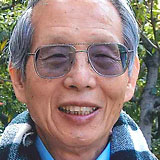
Ken Yabuki is a licensed marriage and family therapist with Asian American Christian Counseling Service. He is a former pastor at Union Church of Los Angeles. He has been active in the eld of mental health for over 40 years.

John Ng is the pastor of Restoration, a church that meets in Sierra Madre, CA. He loves his wife, Cindy, and their three little kids, Sienna, Kassia, and Isaiah. John is passionate about communicating God’s Word and seeing people grow in Jesus.