If you were in the Hoh rainforest during the summer of 2021, you may have spotted me: an orange dot, squatting on a patch of rock by two swelling rivers, transfixed by their tempestuous convergence. Unlike Narcissus, it wasn’t the water’s clear reflection of my own face that held me; it was the opposite — its opacity, the inscrutable currents, hiding depths and a bed of unknown.
I contemplated why I was so afraid of bodies of water like this one. Perhaps it was their threat of overwhelm, my loss of control. If I let go, where would the current take me? I had a recurring nightmare of skyscraper-high tsunami waves bearing down repeatedly upon entire towns and me.
And yet, I was deeply drawn to bodies of water. Whenever I entered a beach, I would not let myself lie down on the sand until I forced myself into the usually frigid water. Then, I would emerge, having done battle with the waves, and allow myself the reward of resting under the sun.
Water connected all the places I had ever lived: Malaysia, California, New York City. In that sense: Water constituted my home. The shrooms that my friends and I had eaten hours ago were starting to settle in my system. If water was my home, then, perhaps, the water was me.
The question morphed: Why was I afraid of myself? What currents within me did I fear surrendering to? The answer washed up on the shore.
A few days later, I stepped out, dripping wet, from a bathroom stall and reached for my phone to formulate the words to my younger sibling: I think I am going to get top surgery and take testosterone.
Fuck yeah, they replied with what I hoped, LFG!!
• • •
That was three years ago — a turning point that unleashed a dizzying torrent of changes in my life, career, relationships, body, and name. To this day, however, I cannot really explain all my decisions to anyone, including myself. I regret how I went about half of my choices. But I do know that, now, I feel more solid. I look at myself longer in the mirror. I feel happier when people do not refer to me by “Sarah,” but “Kai,” a syllable pulled from my Chinese name 凯灵, free of gendered connotations for English-speakers. Are these reasons good enough? I do not know whom I am asking.
• • •
That same sibling told me on my 34th birthday, looking at my shaved head, Timberlands boots, and denim vest, that I seem to have recently embraced a masculine, working-class aesthetic. Yes, I admitted that I kept staring at the youthful, lanky construction workers on the streets of Melbourne when we were there for the World Cup (women’s, of course).
Is it possible to desire the form, the aesthetic, and not its content or core? An essence-less gender? How else to explain that I feel better when the flight attendant calls me “sir,” compared to “ma’am,” but I have zero, if not negative, desire to identify as a man. I am not seeking a form to match my “essence,” if there is one.
• • •
On the doctor’s intake form, I write, “gender fluid.”
• • •
Form is emptiness, Emptiness is form. - the heart sutra
Thich Nhat Hanh tells me there can be forms without a distinct, separate essence. Just as a wave is a form amidst the ocean, so am “I” among all beings.
But I desire certain forms! And I know what forms I do not want: A stick figure with a triangle for a pelvis; long hair; long beard. “Gurllll!”
It is like this. On Sundays in Brooklyn, I go to my Protestant church, sing, take the Eucharist, and hug the queers in the pews. I love many forms of church, but I will not say any creed — arguably the defining core of Christianity — these days, and I have not for years. It is not that I think there is no value to creeds or Scriptures, but what I really love is the forms that they facilitate. The sweetly earnest discussion circle after the sermon. The closing of eyes to pray. The kids rattling toys, out-of-step with the drummer on stage.
• • •
“Gender” is a language spoken between people. Certainly, I would not have a gender if I lived, alone, on a desert island. Would I have been attracted to Timbs over heels then?
If pushed on the question of “essence” — but how do you identify?? — the truth is when I try to examine “my self,” what is inside the form, I see swirling, opaque waters that lead me outside of myself.
It is immensely frustrating to not be able to sketch it, to comprehend it. I remind myself that comprehend comes from the Latin root comprehenderer, which means to lay hold of, grasp or seize violently, as in to “comprehend criminals.”
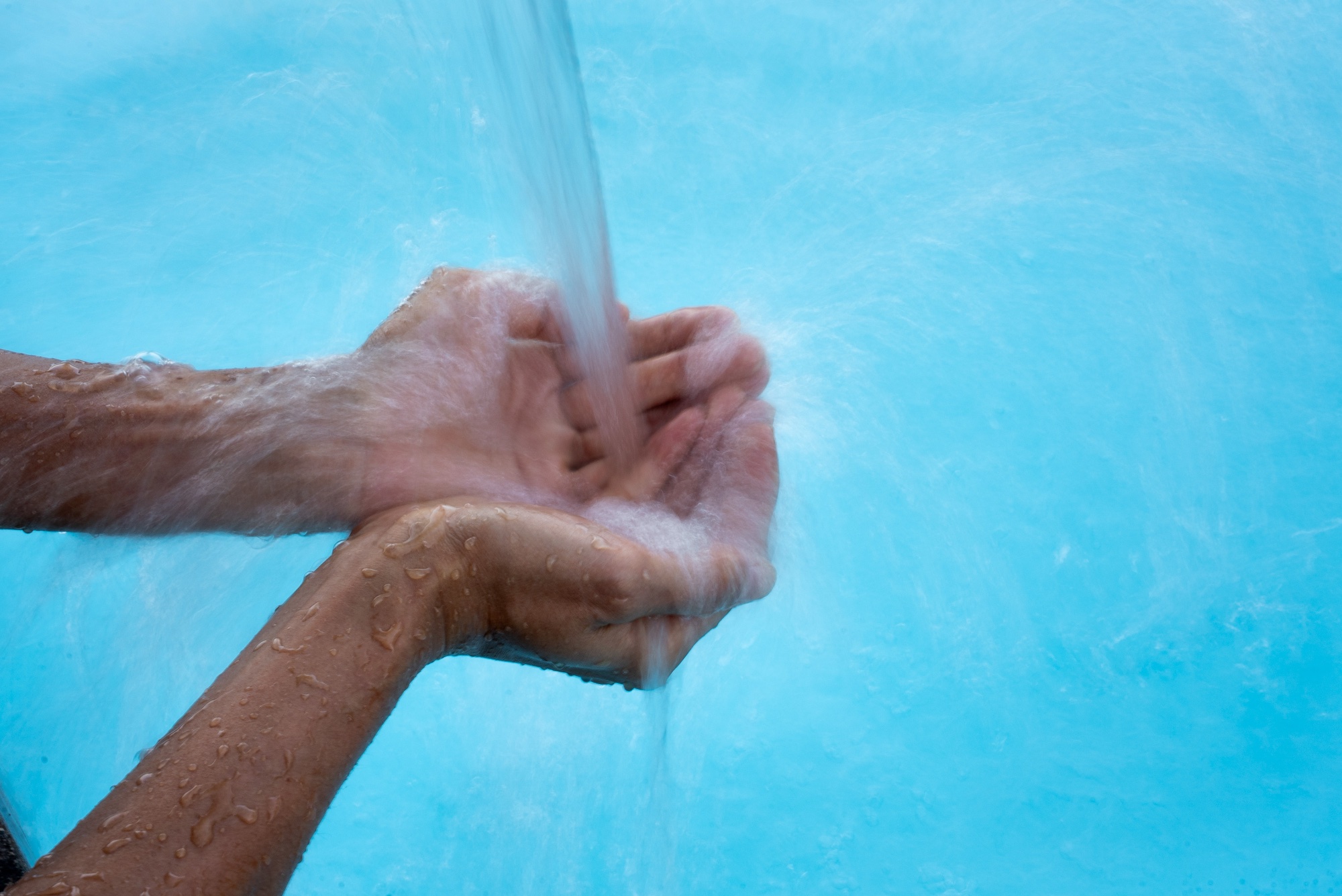
To try and grasp water with your bare hands.
I may not be able to name it, to see it or hold it, but trust me, I would fight like hell to defend “it.”
• • •
On my license and passport, “X” marks the spot.
A few weeks after my 34th birthday, the 47th president issued an executive order that nullified any future “X” gender markers on passports, and cast bureaucratic suspicion over existing ones.
I was reading the details of that order on a Friday evening, standing stiffly on Detroit airport’s walk-way to catch a flight for a weekend trip to North Carolina.
Tendrils of panic snaked up my body. A few hours ago, I had placed a package in my academic department’s mailroom with my passport, name change court order form, and an application to change my “X” to an “M” to give me less trouble in certain international airports. I feared that my passport would be suspended in bureaucratic limbo, and that I would not receive it back in time to fly, in a few months, to Malaysia to conduct my research. My entire PhD career was dangling in mid-air.
When I met up with friends in North Carolina, my mind darted to these questions at every pause in conversation; in the bathroom, I refreshed the Reddit thread (/Passport), which was inundated with trans folks, continuously.
• • •
A miracle.
The package never got mailed, it turned out.
I cried.
A helpful staffer came into the department’s mailroom over the weekend on her day “off,” retrieved my package, and informed me.
The next week, I bought her four bars of vegan chocolate as thanks.
“Wow! You must have spent at least $30 on these.”
“They were on sale,” I said. What I did not say was that I would have spent that amount ten times over for what she did for me.
• • •
En route back to Detroit, the TSA agent in Raleigh, North Carolina looked at my driver license — I held my breath — and waved me through — released my breath. Instead of saying, “Thank you sir” or “thank you ma’am” as he (I assume, but could be wrong) had been doing to everyone prior to me, he said, “Thank you” then mentioned the name on my ID.
As I passed him, I asked him if he had gotten any new directions from the new Trump administration about how to deal with forms of ID with X as a gender marker like mine. He said that not yet, and added that, on his screen, my gender category showed up as “blank,” which is why he used my name instead.
It is likely true that the State department has deleted the “X” option for gender within airport security identification systems, which is why my gender marker was “___.”
It is also true that, in the face of blank opacity, people can make kind choices. To choose to reflect back, rather than to comprehend. I would like to borrow his kindness for myself.
• • •
The second sentence of Genesis reads like this: And the earth was without form, and void; and darkness was upon the face of the deep. And the Ruach Elohim [Spirit or Wind of God] was hovering upon the face of the waters.
The rest of the chapter details how G-d transforms this dark, watery, formless deep into order, division, and distinction. Sun, you go here. Moon, there. Aha: Day, then Night. Water, please recede and make space. There! Seas and Earth.
Yet, for all that hubbub about order and division, dusk and dawn remain. Mangroves and swamps. There to remind us that the forms are temporary, shifting; that underneath them all is watery, deep formlessness that touches all of us.
Perhaps the closest we can get to it is to hover above it, never quite touching, certainly far from comprehending. To draw close to it, to trace its forms, to let it terrifyingly undo the selves we have built — waves crashing over sandcastles. So we build new forms. And again. And aga in. Anda gain.
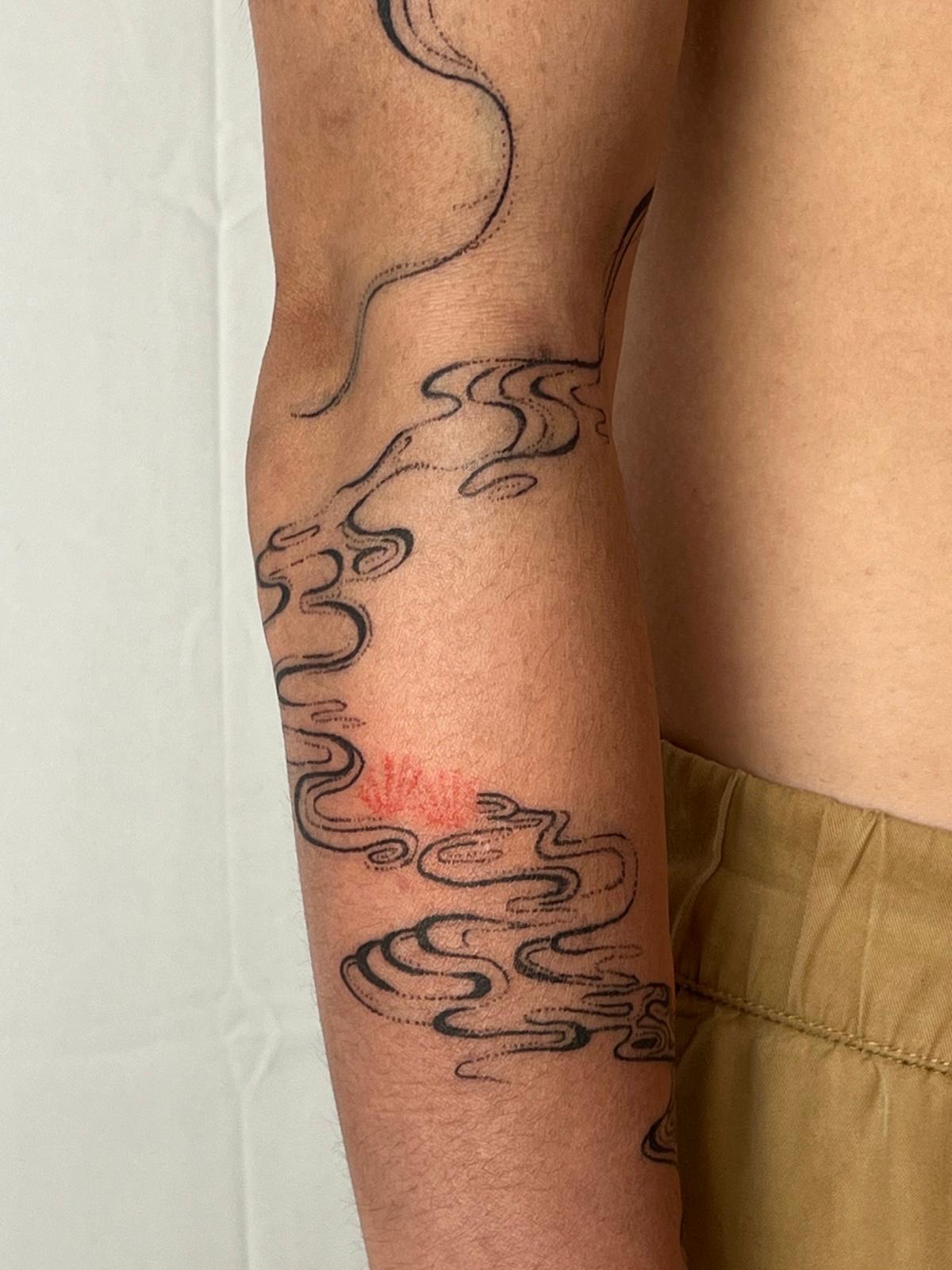
Kai Ngu (they) is a writer and Ph.D. student at University of Michigan. Born in Malaysian Borneo, they call New York City home. Kailinngu.com.
Aaron Huang was born in a Christian family, but never had an “aha” moment. Traveling and nature photography help him experience the beauty of God’s creation and remind him of his own insignificance and God’s grandeur. Find him on Instagram @heyeyron.