
In the spring leading up to my top surgery in 2023, I got in the habit of taking off my shirt when I was hiking in the woods and it got a little hot. I would make sure that there was no one within sight or hearing of me — for at least 15 minutes — and that the only company I had was the company of trees (or if a beloved human had joined me to hike). My shirt was always tucked into the chest straps of my backpack, close enough so I could whip it out and shove my body inside the moment I heard the sound of a human footstep or voice.
When I felt all was clear, I would walk along the trails feeling just the sun and my backpack on my chest and back, for what felt like a series of held breaths and muttered gratitudes to my only witnesses: trees, rocks, insects, squirrels, the like. But especially the trees, who stood tall to my left and right, both witnessing and guarding me from other eyes. Thank you so much for having me here, I said, for you see, I can’t quite do this in my society, they only let certain types of bodies, and in certain places, walk like this without this layer we call clothing.
Once, when the sun was particularly beaming and I was feeling a little reckless, I spotted a lying, wide trunk and I laid myself outstretched on it, languidly. After a few moments of lolling my head around, I flipped myself around and hugged it. At the time I hadn’t lifted my head up to learn about the trees around me, so I cannot tell you if it was a white oak, black walnut, or eastern white pine — or a non-native tree to the place we now call Connecticut, from the Mohegan word Quinnehtukqut, which translates to "long tidal river" or "beside the long tidal river.”
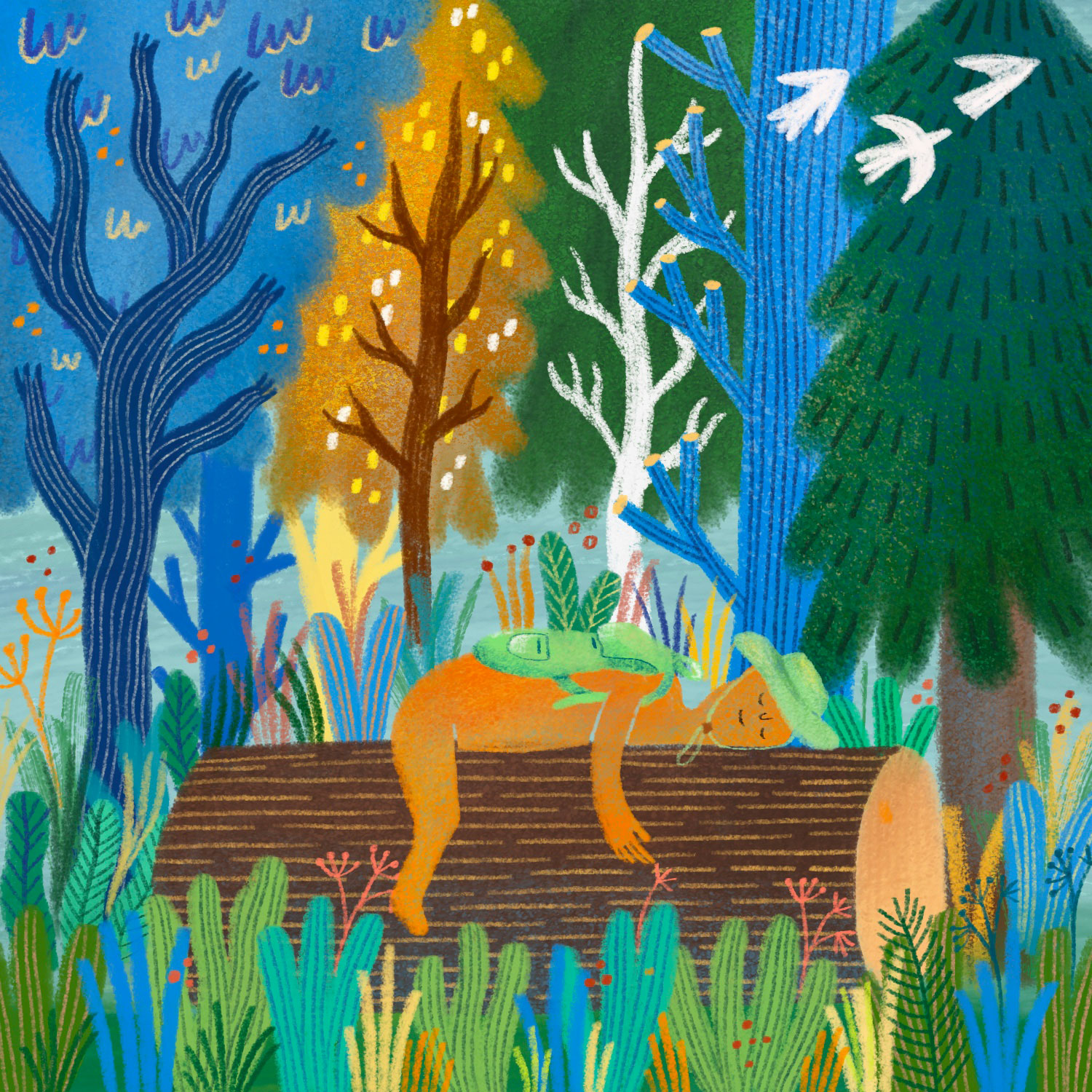
So at the time, the trees were, for all intents and purposes, sexless to me. I was certainly not thinking about the sex of trees or plants writ large. I was not aware that, for instance, a pine tree — such as the Norway spruce that now scratchily nuzzles my head when I stand on my balcony and greet it in the mornings in Michigan — has both male and female reproductive parts (cones) on it. A pine would be considered a “monoecious,” for it has both reproductive parts on the same plant. If a plant has both male and female parts within a single flower, then it is called “hermaphroditic,” “bisexual,” or, perhaps my favorite, “perfect.” Sufficient unto themselves, perfect flowers can self-pollinate without assistance from bees or insects. Unlike the human connotations of the word “perfect,” which implies rare and infrequent, 90% of plant species have both female and male reproductive parts. (Occasionally, they change sex in response to changing conditions; male parts require less energy to produce, and are thus more suitable in times of scarcity, and vice versa). “Perfect” flowers thus include your household names: sunflowers, roses, lotuses, tulips, hibiscus, and lilies. It is no wonder that Viv, a romantic bestie, prefers to respond, “flower,” when asked about Viv’s gender.
At the time when I was hiking around in Connecticut, I was, instead, most likely thinking of my father, who commonly walks around in the house without a shirt on whenever he was feeling overheated — which was fairly often, when we lived in the tropics — and how I would stare into his armpit, its sudden eruption of hair and a few protrusive moles. His shirtless state seemed to accord with his status, as the head of the household, or sovereign: the one who can be unclothed within his domain. I did not envy his power, but his freedom.
It was through my dad’s constant sermonizing as well as his and my mom’s encouragement that I have Bible verses engrained in the folds of my brain’s lobes, such as this sentence from Jesus, as written in the Gospels:
“And why do you worry about clothing? Consider the lilies of the field, how they grow; they neither toil nor spin” (italics mine).
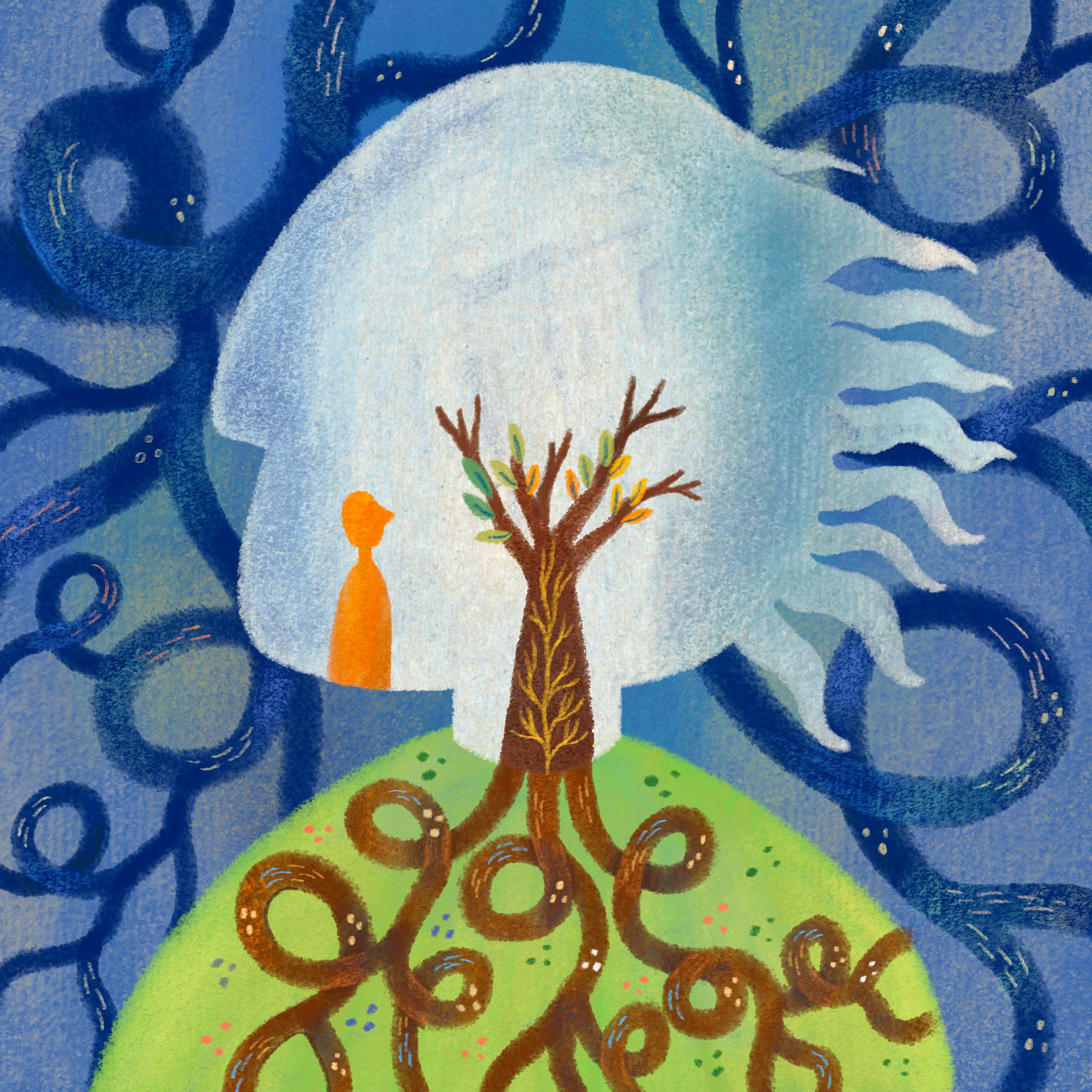
When I was younger, I focused on the second part of this verse, “ yet I tell you, even Solomon in all his glory was not clothed like one of these,” taking it to mean that what we should focus on was the visual splendor of the lilies. Look how beautiful the lilies are; God takes care of them, how much more you humans. Now, I find much more amazing the anatomical splendor, how it is that lilies — another perfect flower — grow, how they reproduce. Consider the lilies: How perfect they are, without the toil of seeking pollinators or pollen-receivers. If the lilies were to speak, maybe they would say: Indeed, why do you all worry about clothing?
Here, the English language of humans falters again. “Perfect” does not mean the flowers are actually, to eat my words, “sufficient unto themselves,” for of course they require water, sunlight, soil. Nor does it mean “perfect” as in everlasting, unchanging. Flower petals are meant to drop off, after they birth fertilized seed (sometimes embedded in fruit). Even the two evergreens — the Norway spruce and Eastern white pine — watching me as I type this on my balcony this morning shed and replace their needles every few years. Holding on, resisting change, gets in the way of new life. To be “perfect,” then, is in a way to be very efficient at dying.
In October 2021, I drove myself to Blue Cliff Monastery in upstate New York. I was four months out from my shrooms-inspired conclusion that I wanted to get top surgery and try testosterone. I was in a new city, trying a new career, with, quite importantly, new health insurance that would cover top surgery and HRT. I was 30-years-old, fresh off a few consultations with a surgeon and endocrinologist. Although I had not started testosterone, I felt like I was already in the swing of my second adolescence, bleaching and dyeing my hair (at home) for the first time with new friends, contemplating the risks of upending my longstanding monogamous relationship for polyamory — in short, turning my life over. I was terrified, and full of desire.
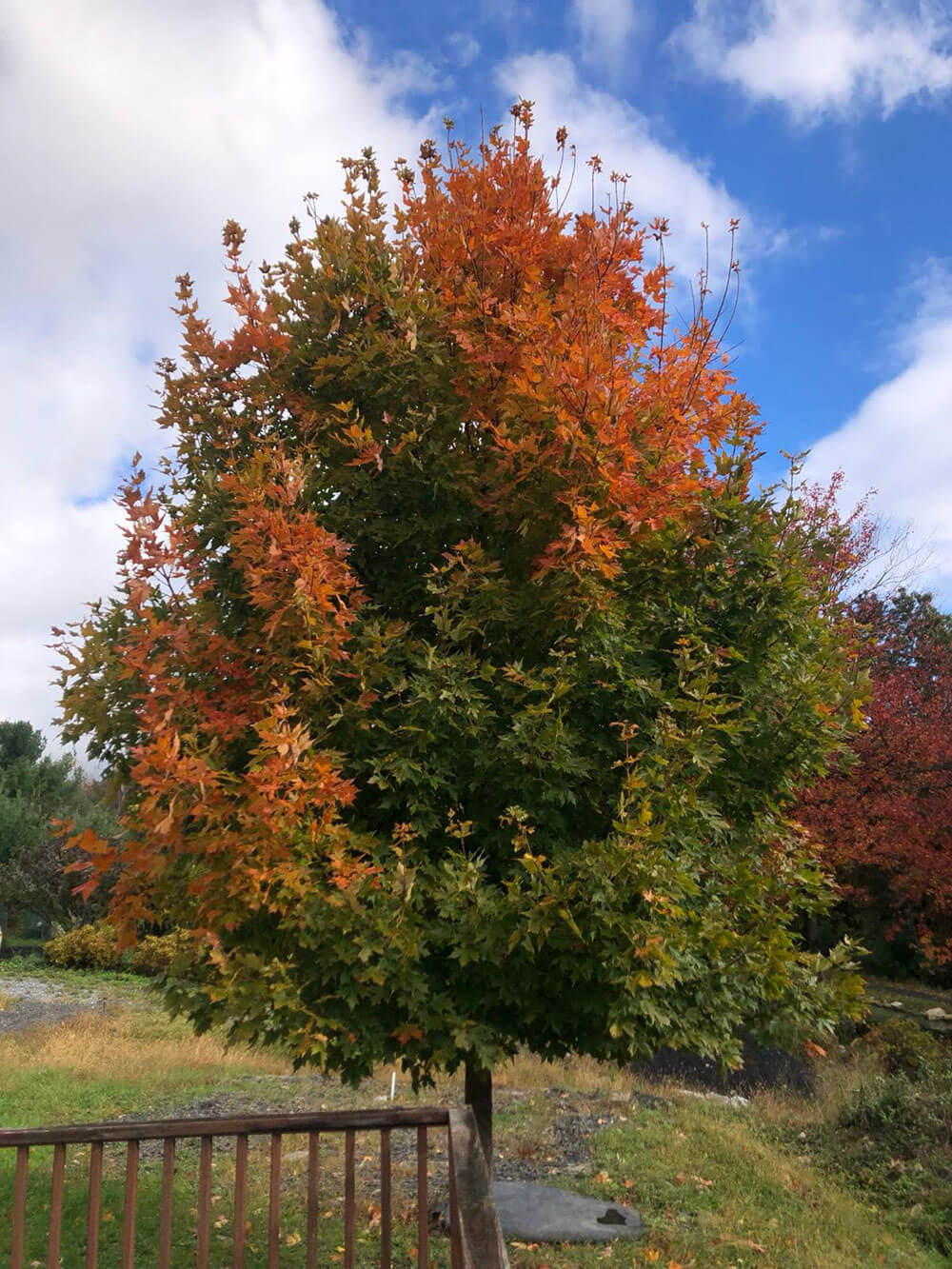
During the Buddhist monastery’s afternoon walking meditation, in which we walked slowly and mindfully, we walked past a particular maple tree, who called out to me. The rest of the group ambled forth while I stayed on. At the time, the tops of my hair were bleached into a blueish gray, signalling a wisdom I had yet to acquire, while the undersides were my usual jet-black. (While buying the bleach at Sally’s, I had a near panic attack in aisle four — what was I doing, damaging my hair in this unnatural way?)
I was a creature in motion, literally in transition. The sight of this tree — with its orangey tops, green undersides — brought me more calm than the forty minutes of sitting meditation earlier at 7am. It was certainly not the only tree in the midst of change, but most trees were either committed to a mostly-orange palette, or mostly-red, or smooth green-to-orange transition. This was the funkiest-looking, with chlorophyll still hanging on in bits and pieces, disoriented in multi directions.
We stared at each other, me looking at it, it looking at me, it assuring me I wasn’t alone, telling me that there was nothing more natural than to change color, to shed, to metamorphize. And that this dying was, maybe, perfect.

Kai Ngu (they) is a writer and Ph.D. student at University of Michigan. Born in Malaysian Borneo, they call New York City home. Kailinngu.com.
Edwina Kung is a visual artist from Hong Kong, based in Nottingham, UK. Her work explores memory, migration, and the power of community through visual storytelling. Alongside her art practice, she brings creativity into libraries, schools, and community groups through workshops and commissioned projects. Find out more about Edwina’s work: www.edwinakung.com instagram: @edwinakung